(This post may be a bit long for some email software, so if you don’t see “Next stop: Reichsburg Castle Cochem, Germany” at the bottom of your email, you’ll need to click on the title to go to the website and see the full post).
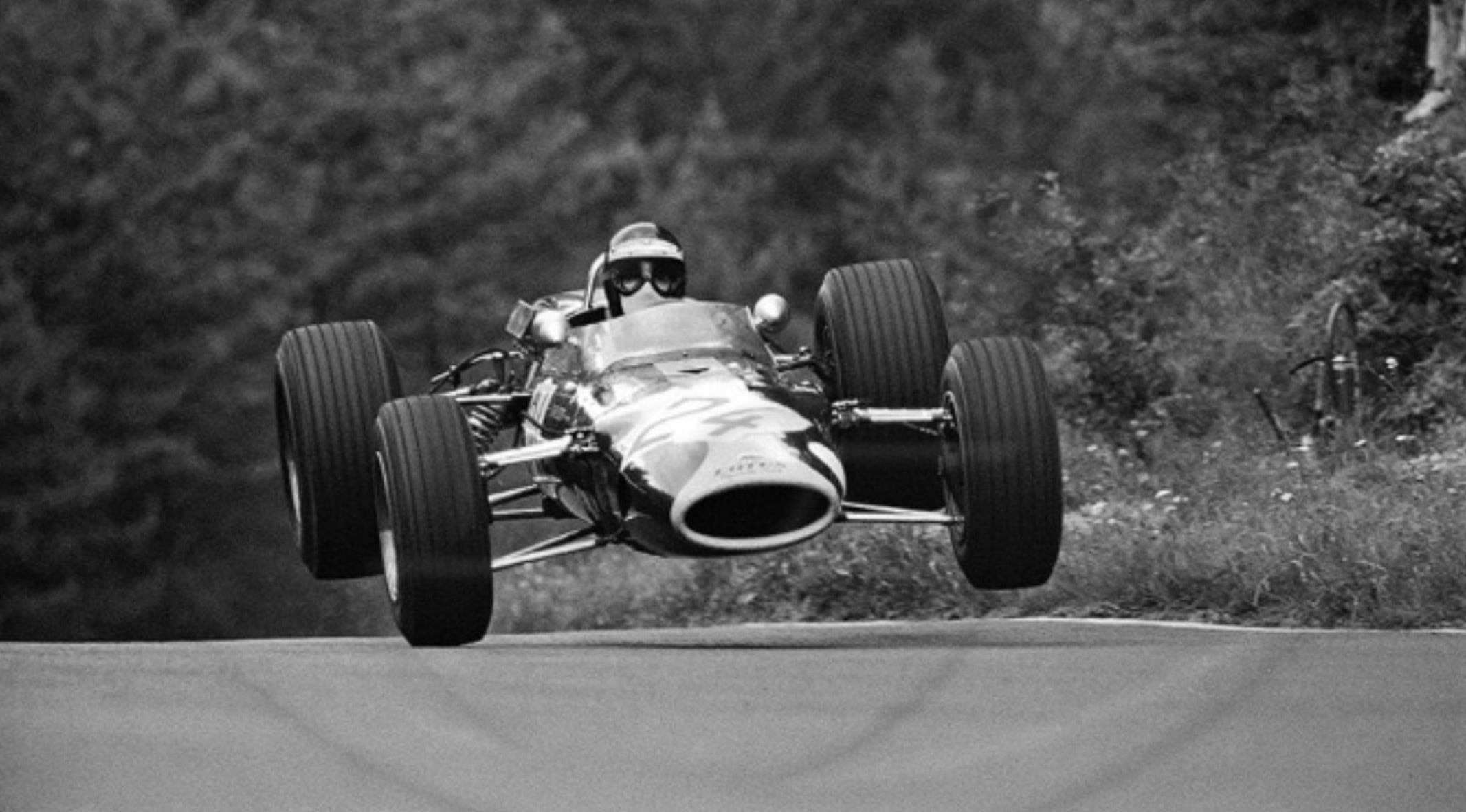
To the petrol heads amongst you, the mere mention of the name “Nurburgring” no doubt invokes heroic acts of driving bravado, around the 170+ corners of the undulating and sunlight dappled Nordschleife track as it winds through the German forest, the iconic image of Jackie Stewart’s F1 car airborne as he wrestled his way around this monstrous track in the Eifel region of Germany.
Possibly you’ve seen it discussed on Top Gear, watched the legendary Sabine Schmitz (RIP Queen of the Ring and world’s fastest taxi driver 😢) do an almost 10 minute lap in a Ford Transit van, or you may have even driven it on the PlayStation. But the reality ….. well now, that’s something different entirely.
So, what is the Nurburgring and how did it come to be? In the heady days of the 1920s, there was a bit of a trend for motor racing on public roads … all properly closed off from the public (mostly) but still … they were public roads. Iconic longer distance races like the Mille Miglia (literally translated to 1000 miles) were problematic, so in an attempt to showcase and promote German engineering and automotive excellence Germany decided to construct a purpose-built race track in an out of the way location in the countryside of the Eifel region.
The track originally consisted of two components, the northern loop (Nordschleife) and the southern loop (Sudschleife). The track opened in the spring of 1927 (99 years ago) and it consisted of both sections of track - around 174 bends at an average width of 8 to 9 metres and 26.265 kilometres in total. In 1929 the full circuit was used for the last time for a major racing event as subsequent Grands Prix were run only on the Nordschleife (the shorter and safer Sudschleife was used for motorcycles and minor race events and was eventually abandoned in the early 1970s). Memorable pre-war races at the Nordschleife (now only 160 turns and a mere 22.835 kilometres long) featured Ringmeister (Ring Masters) such as Rudolph Carracciola, Tazio Nuvolari and Bernd Rosemeyer.
After World War II racing resumed in 1947 and in 1951 the Nordschleife again became the main venue for the German Grand Prix as part of the Formula One World Championship. A new group of Ringmeister arose - names like Alberto Ascari, Juan Manuel Fangio, Stirling Moss, Jim Clark, John Surtees, Jackie Stewart and Jacky Ickx.
But as Formula One cars got faster, the tracks where they raced, which were never designed to contain these monsters, became more and more dangerous. One of the Nordschleife’s defining characteristics, its length and complexity, meant that any safety improvements like barriers, fences and gravel traps became extremely expensive to implement. Even providing similar levels of flag marshals, safety and medical equipment and staff as other venues meant providing up to 7 times more marshals and safety crews than other tracks.
In 1968, following his victory in the German Grand Prix in driving rain and thick fog, Jackie Stewart nicknamed the track “The Green Hell”. Safety concerns from F1 drivers resulted in a boycott of the track in 1970 after the death of Piers Courage at Zandvoort circuit. Safety changes could not be completed at short notice to satisfy concerns so the race was shifted to Hockenheim that year.
Niki Lauda, the reigning F1 world champion and the only driver to ever lap the 22.8km Nordschleife circuit in under 8 minutes (a feat that is difficult to achieve even in modern cars on today’s slightly shortened and straightened circuit) proposed a driver boycott of the track in 1976. Lauda was concerned not only with the lack of marshals and safety arrangements but the forecast called for rain during the race. The circuit is so long and complex that in wet weather some parts of the circuit may be drenched while others are dry. Lauda’s boycott proposal was out-voted and the race went ahead. On lap 2, his car still relatively full of fuel, Lauda’s Ferrari suffered a rear suspension failure and he crashed into barriers, his car exploding in a ball of flame. Lauda was pulled from the wreckage by some of his fellow drivers but was badly burnt.
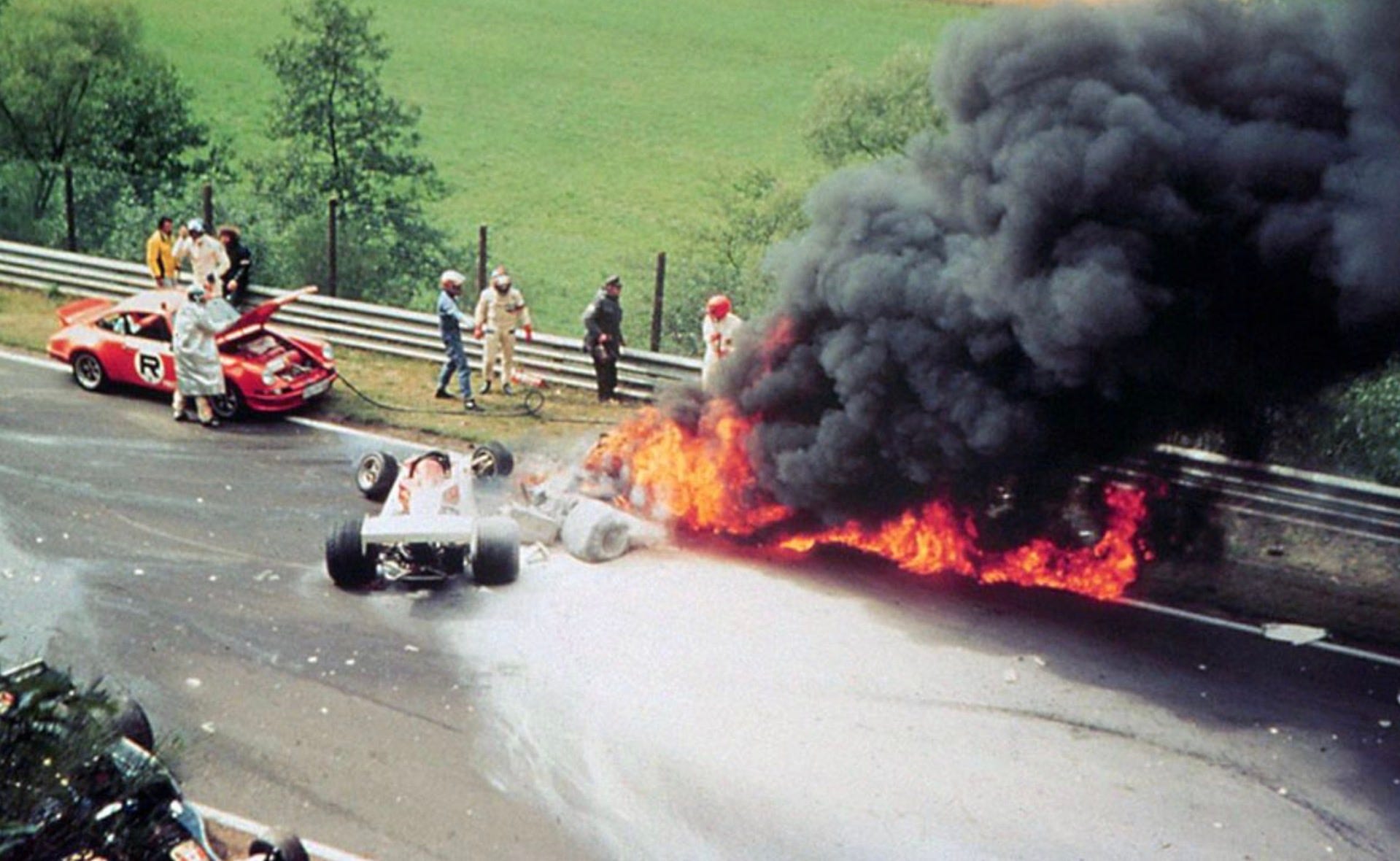
The Nordschleife never hosted an F1 race again. (A fantastic movie to watch is “Rush” by Ron Howard. It documents the rivalry between Niki Lauda and James Hunt, and covers this accident and Lauda’s remarkable recovery.)
The track is estimated to have claimed the lives of over 200 drivers and many crashes, injuries and occasional deaths still occur at the track as it is open for fee paying drivers to drive at their own risk. Track management obscure the modern accident and injury rate.
Nordschleife is still used for endurance racing and classic car racing, as well as testing days. For a fee, any licenced driver can take their own car (or even a car rented specifically for the purpose) around the Nordschleife or you can hop in the passenger seat of a Ring Taxi for a hot lap with a professional driver. Camper vans, however, are not allowed on the track (probably a good thing).
With safety modifications to modern F1 standards impossible to achieve at the Nordschleife, a new modern track, built to the highest safety standards, was opened in 1984. It sits within the confines of the Nordschleife …. as do several villages.
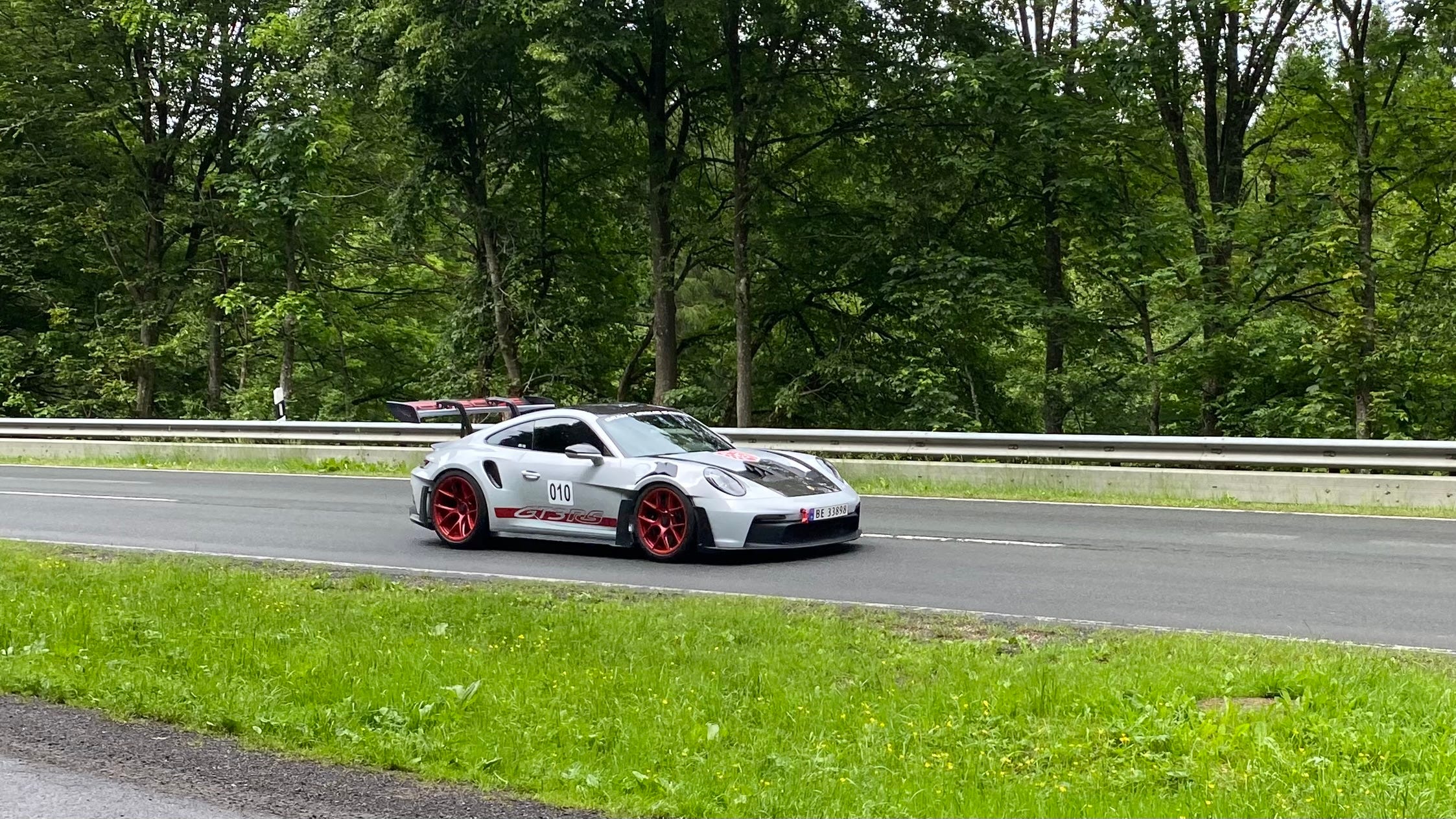
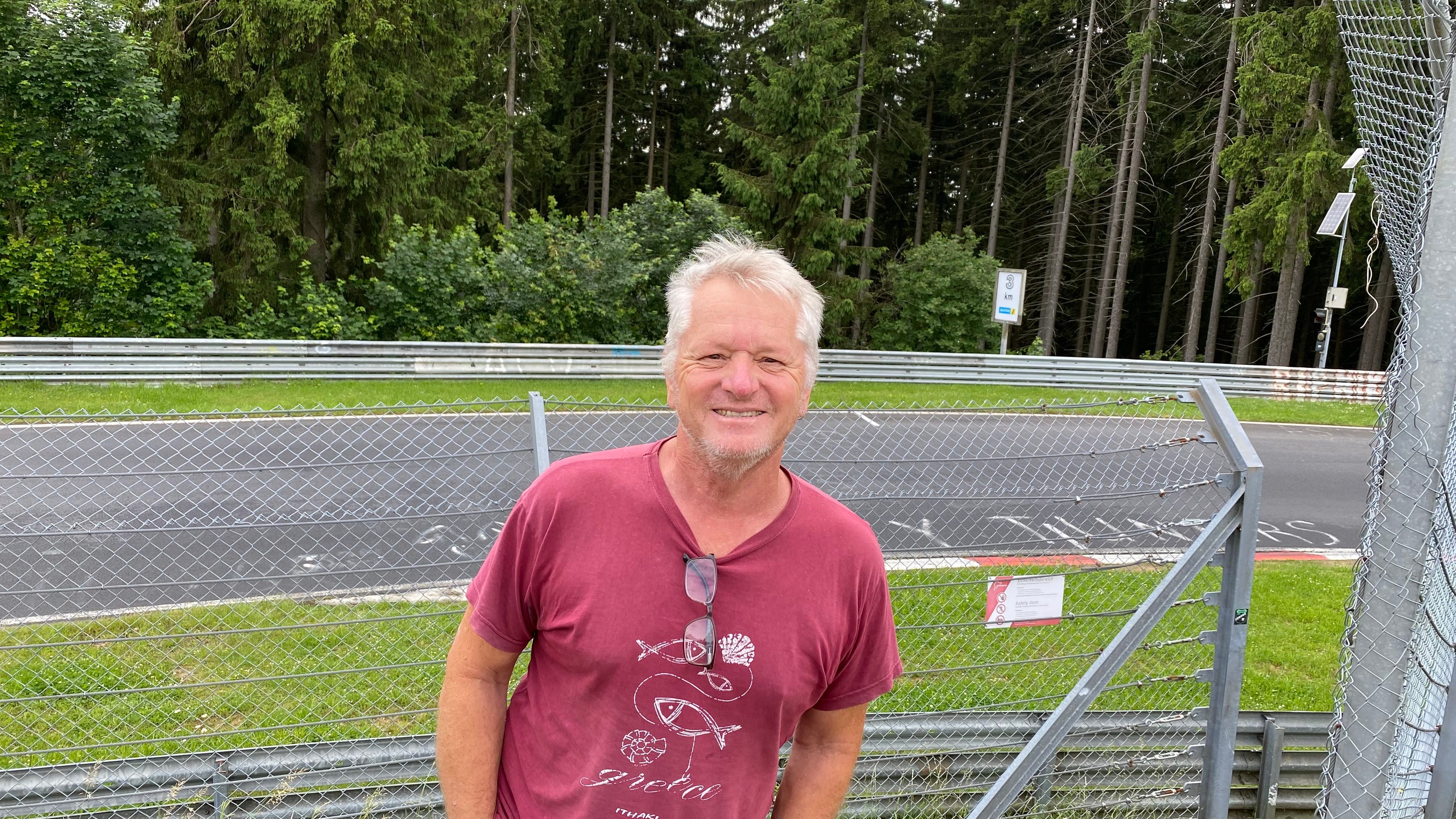
It’s an unusual place to visit as people just park on the side of public roads, walk up forest paths, and try to find a spot to see things from.
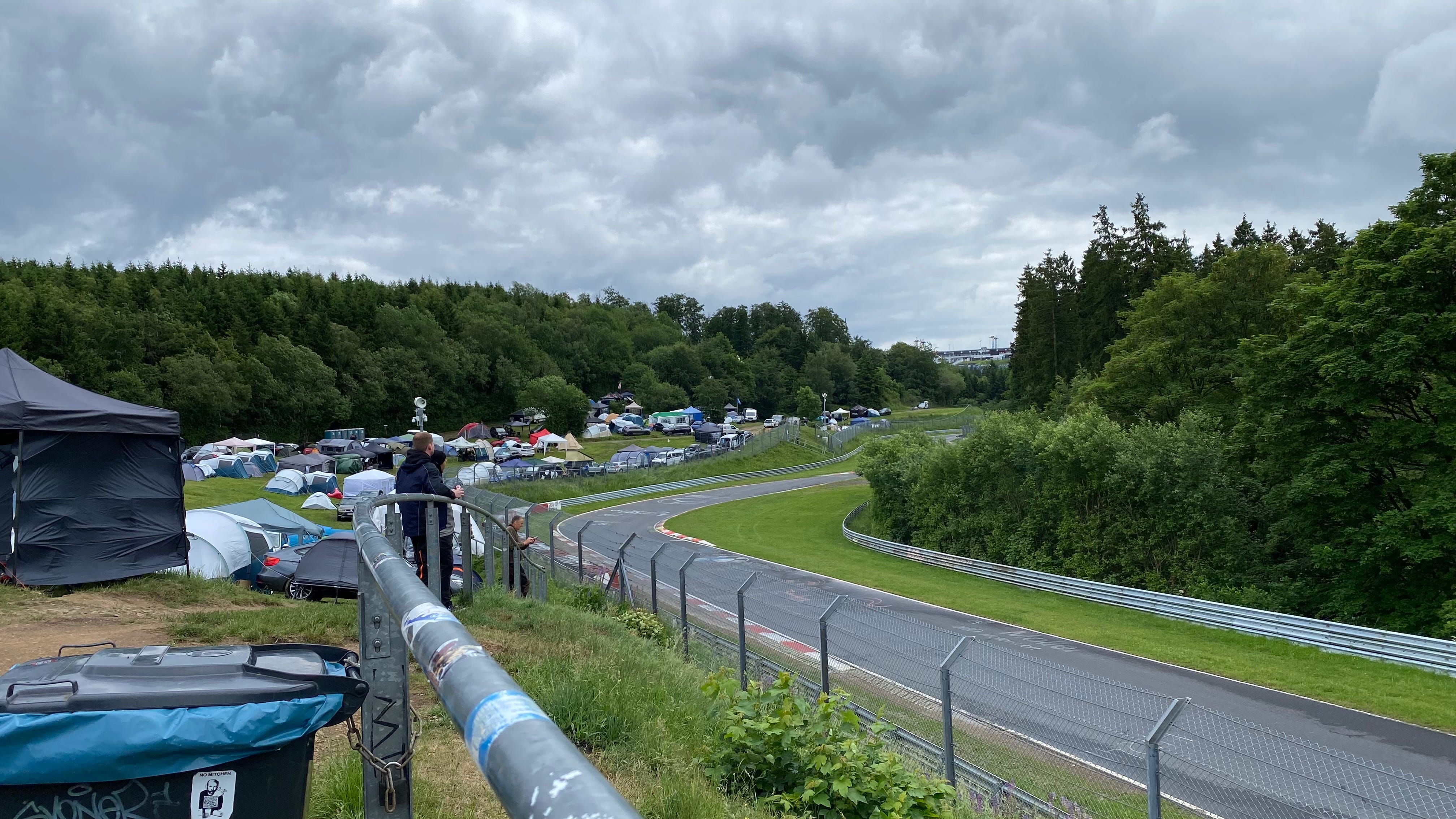
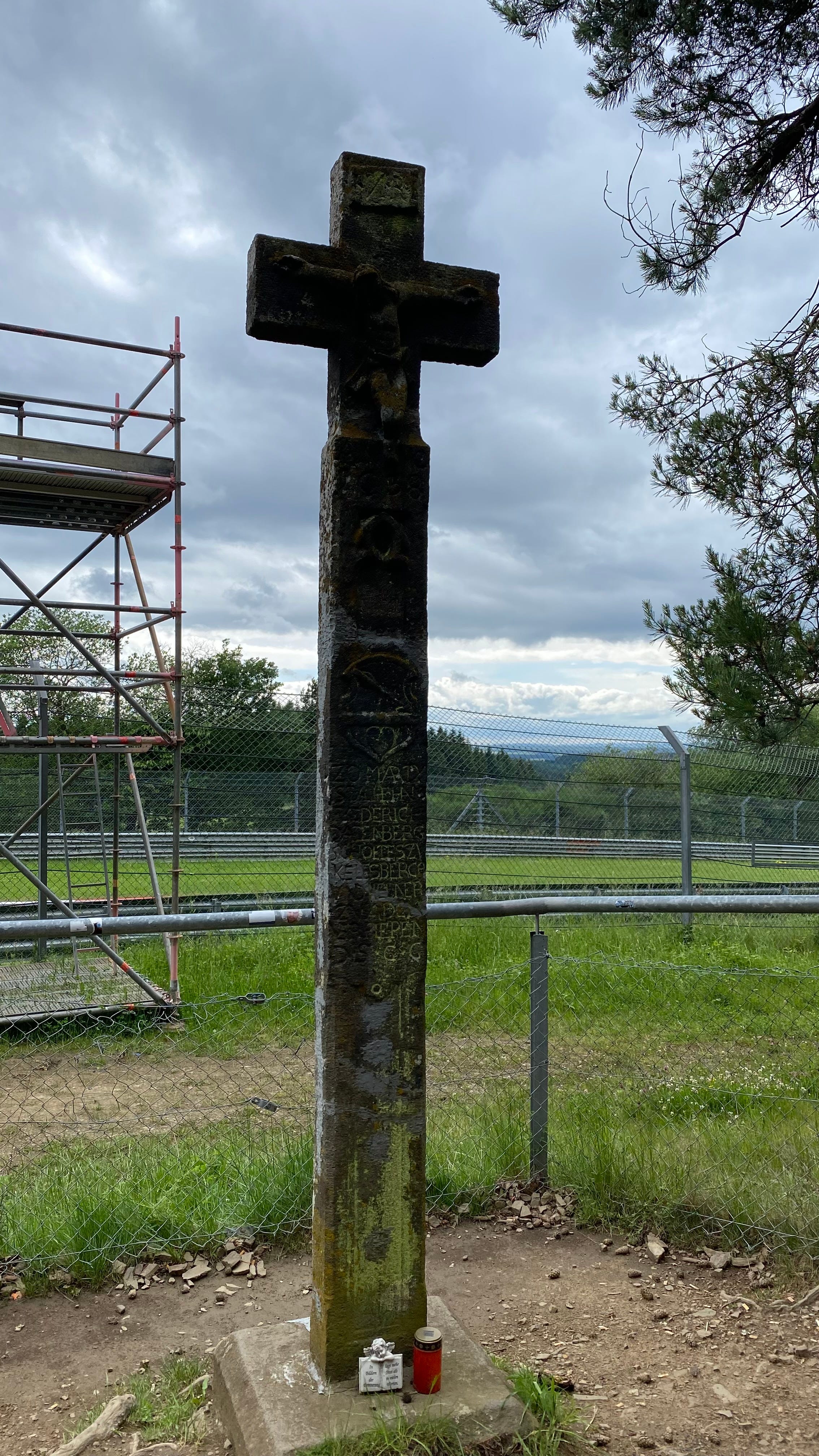
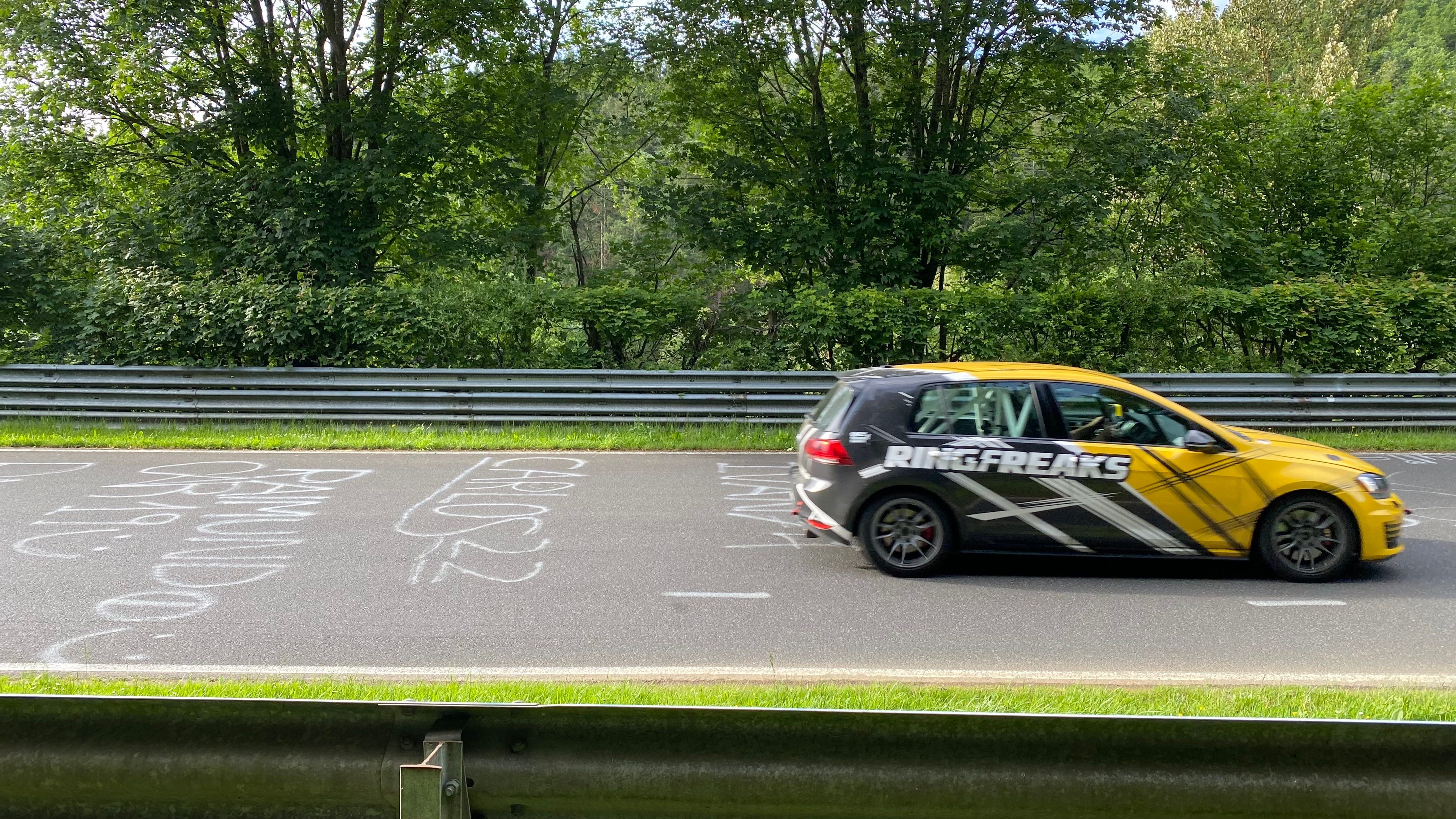
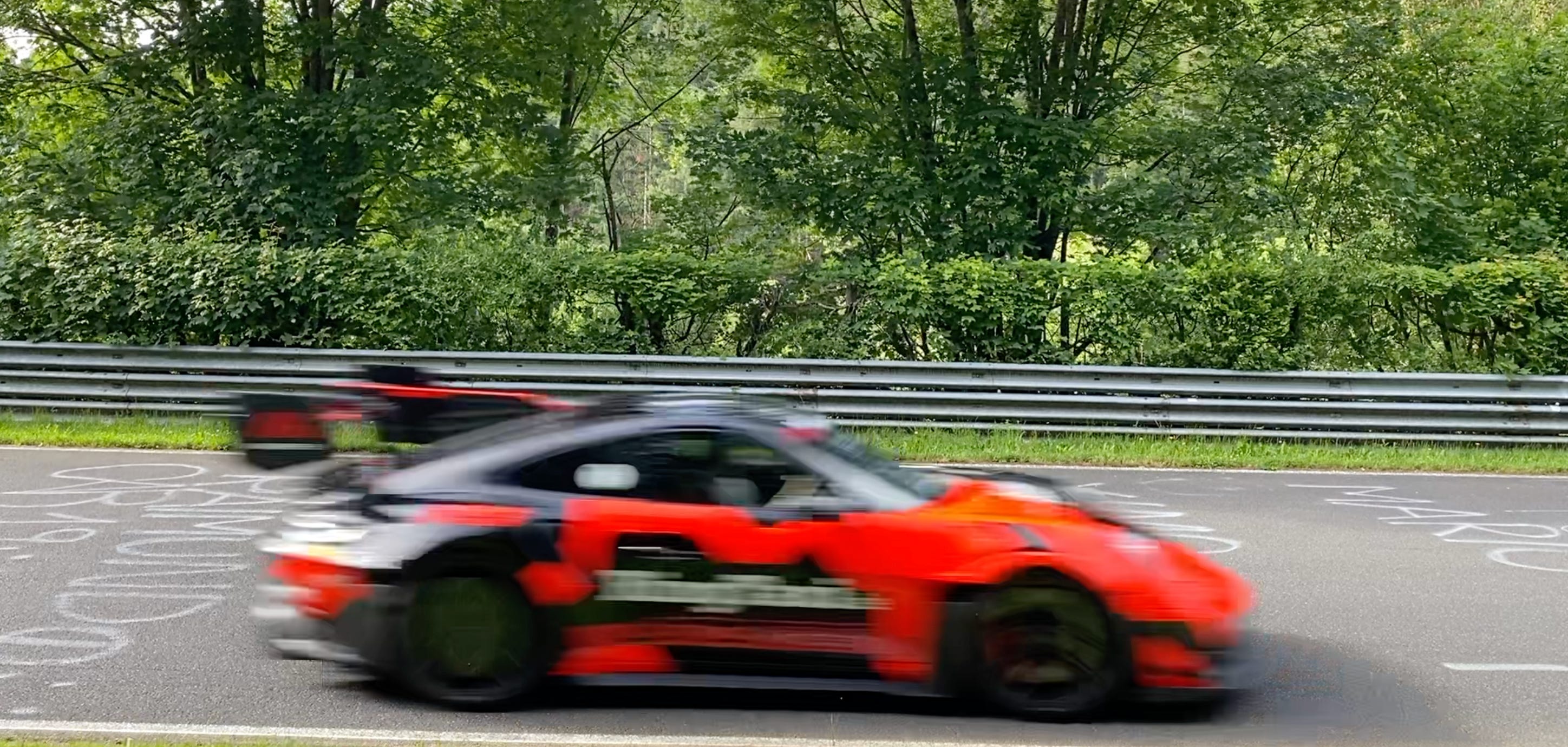
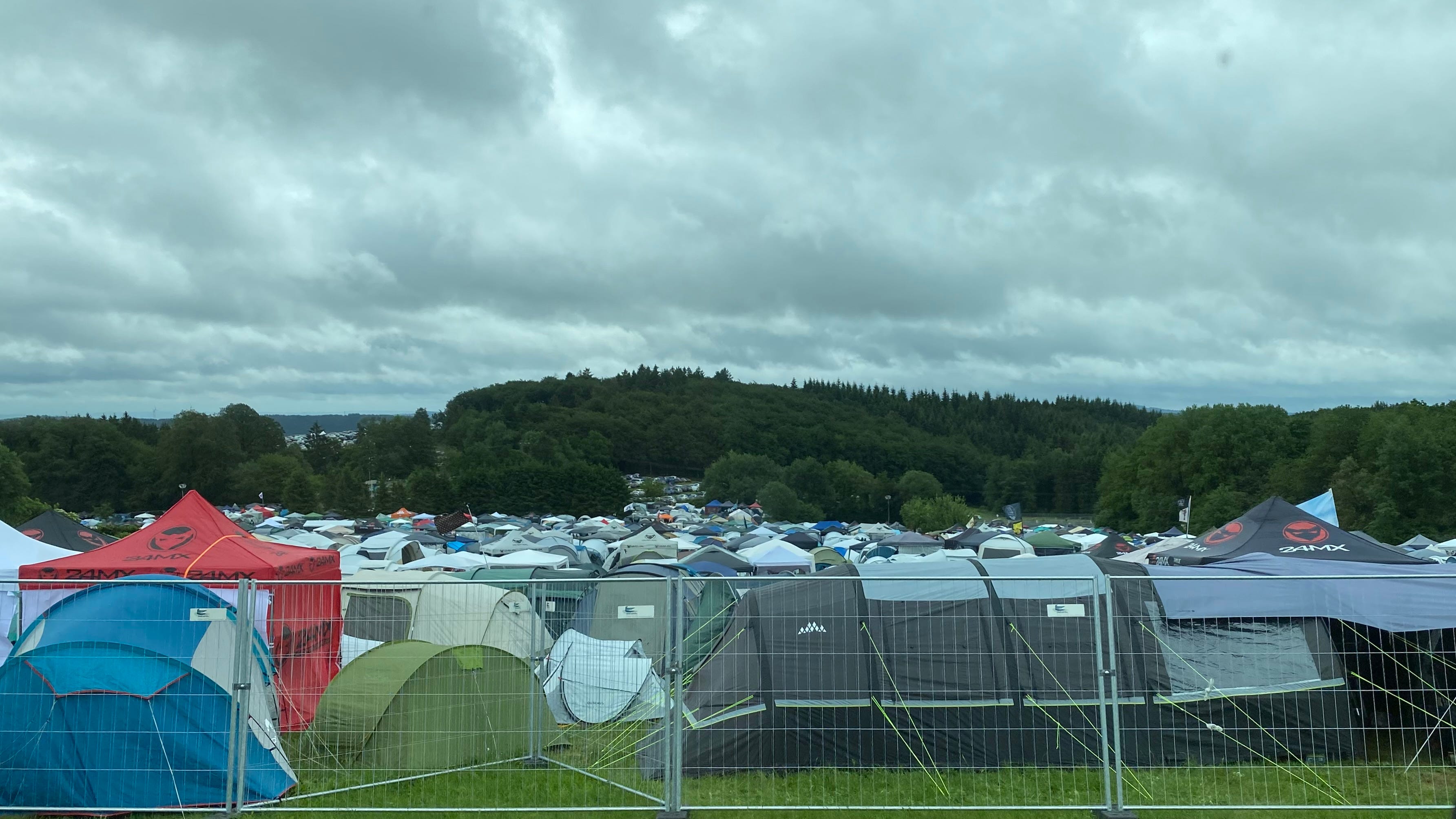
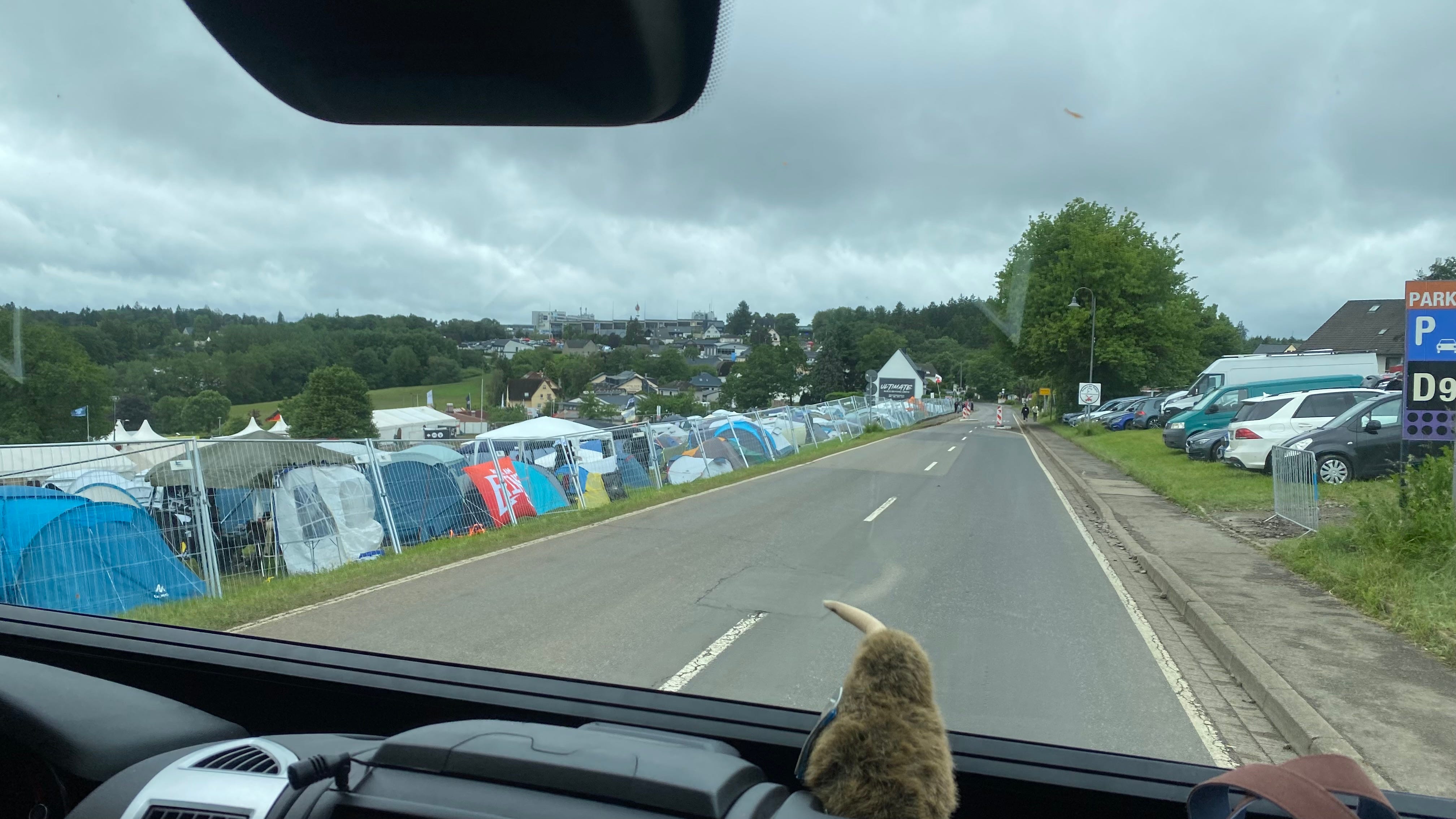
We cut our visit to Nurburgring short because of the huge music festival (and subsequent track closure) and the persistent rain. We ran into a guy from Stuttgart who said many of his favourite viewing spots were closed because of the camping for the festival. Hopefully we’ll make it back here for a look, and maybe even pony up the €400-500 each for a hot lap (takes about 10 minutes, so €50 per minute 🥹) in a Ring Taxi! Donations will be happily accepted 😁.
Next stop: Reichsburg Castle Cochem, Germany