(This post may be a bit long for some email software, so if you don’t see “Next stop: Ancient Corinth” at the bottom of your email, you’ll need to click on the title to go to the website and see the full post).
Nemea was an ancient Greek city, part of the Argolida civilisation and generally connected to powerful city states like Mycenae and Corinth. It also features in Greek myths as the area where Heracles (Hercules to the Romans) performed the first of his twelve labours as penance. The myth says that a large lion was roaming the hills of Nemea killing and consuming flocks of sheep/goats and threatening the people of Nemea. Heracles was tasked with killing the Nemean Lion, a task that no human had managed to perform. (The reason for this is its golden fur was impervious to attack, it could not be killed by mortal weapons. Its claws were sharper than swords, and could cut through any strong armour … allegedly 😉). Of course the hero Heracles (with the help of Zeus) was able to catch and kill the lion (by strangling it with his bare hands) and one of the signifying features of any statue or image of Heracles is the skin of the Nemean Lion draped over his shoulders. When he tried to skin the pelt off, his sword couldn’t cut through the skin, so he used its own claws to do the job. He then wore it as an impenetrable armour - good idea!
Clearly then, Nemea had a status and position in ancient Greece beyond that of an average small town.
Today, ancient Nemea consists of a partially excavated archaeological site including the sanctuary of Zeus, a museum and a stadium.
Stadium
We visited the site a bit backwards in that we went to the stadium first, and then back to the main site & museum.
The stadium was, and still is, the location of the Nemean Games, one of the four ancient greek festivals to be elevated to a panhellenic (representing all Greek people) status.
According to one myth, the games were instituted to commemorate the death of Opheltes, the son of Lycurgus, king- priest of Nemea. A second myth, though, points to the panhellenic status of the festival, attributing to Heracles the institution of the Games, to offer thanks to Zeus for helping him accomplish his first labour, killing the lion of Nemea. The Games took place every two years and included musical, theatrical and mainly athletic events.
The games at Nemea began in 573 B.C. (in a different stadium to this one) and consisted of the gymnikos agon (the "nude" competitions for boys and men) and the hippikos agon (chariot and horse-back races).
Around 415 BC, the majority of the sanctuary of Zeus was destroyed and, as a result, in the following years the Games were held in Argos. In 330 BC, the Argives decided to undertake a building programme in Nemea and to proceed to re-establish the Games here and built this “new” stadium. Nevertheless, the Games returned to Argos in 271 BC, until AD 393, when the Emperor Theodosius banned them.
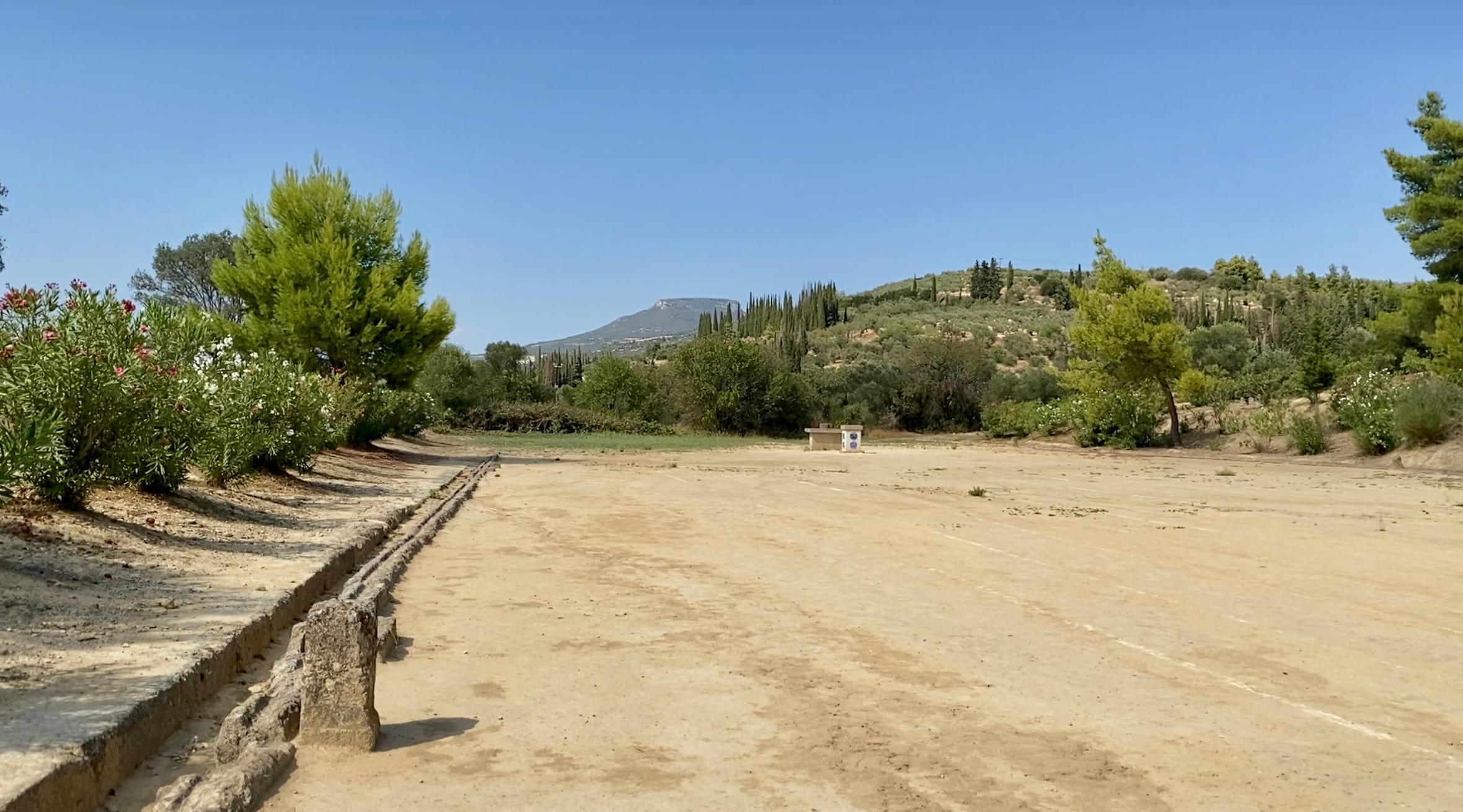
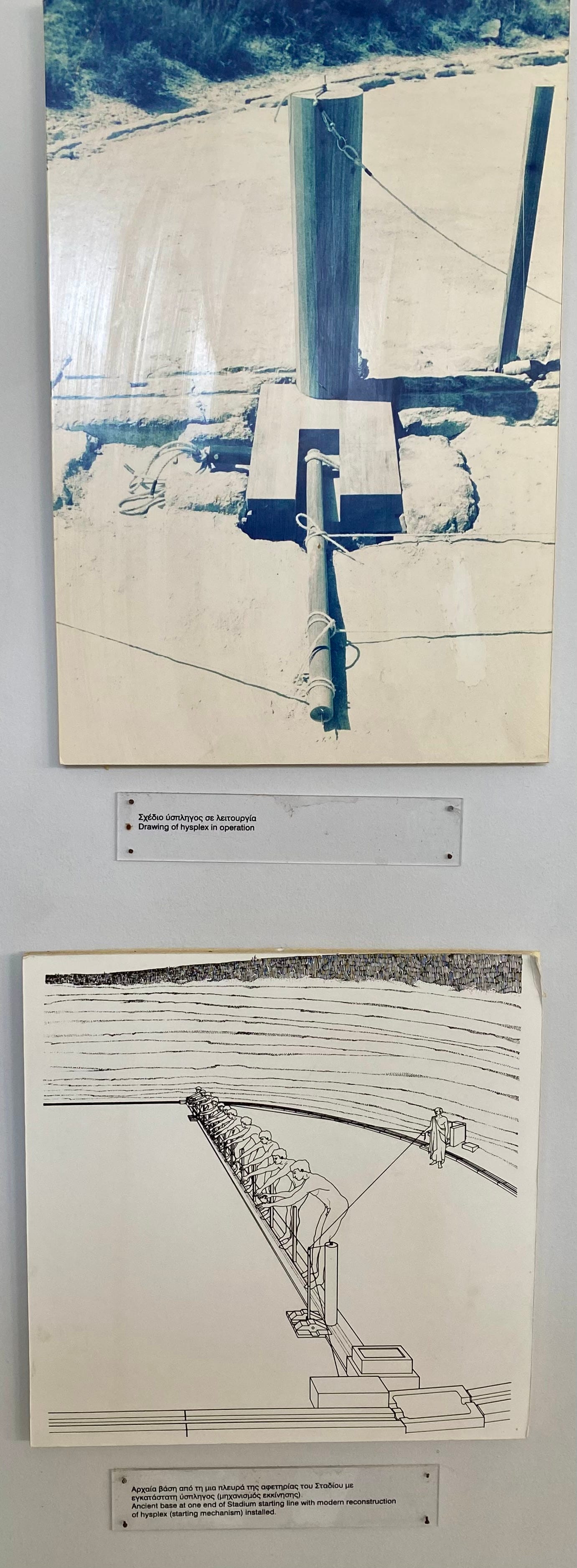
The Stadium’s track was 600 ancient feet long. The starting line, the "balbis", consisted of a line of stones, while it also included the "hysplex", a starting mechanism allowing the athletes to have consistently fair starts to races.
The majority of the spectators sat on the sloping ground, since only a few stone seats were discovered on the west side of the stadium. The judges, called "Hellanodikai", had a special platform on the east side of the Stadium, from where they could oversee the Games.
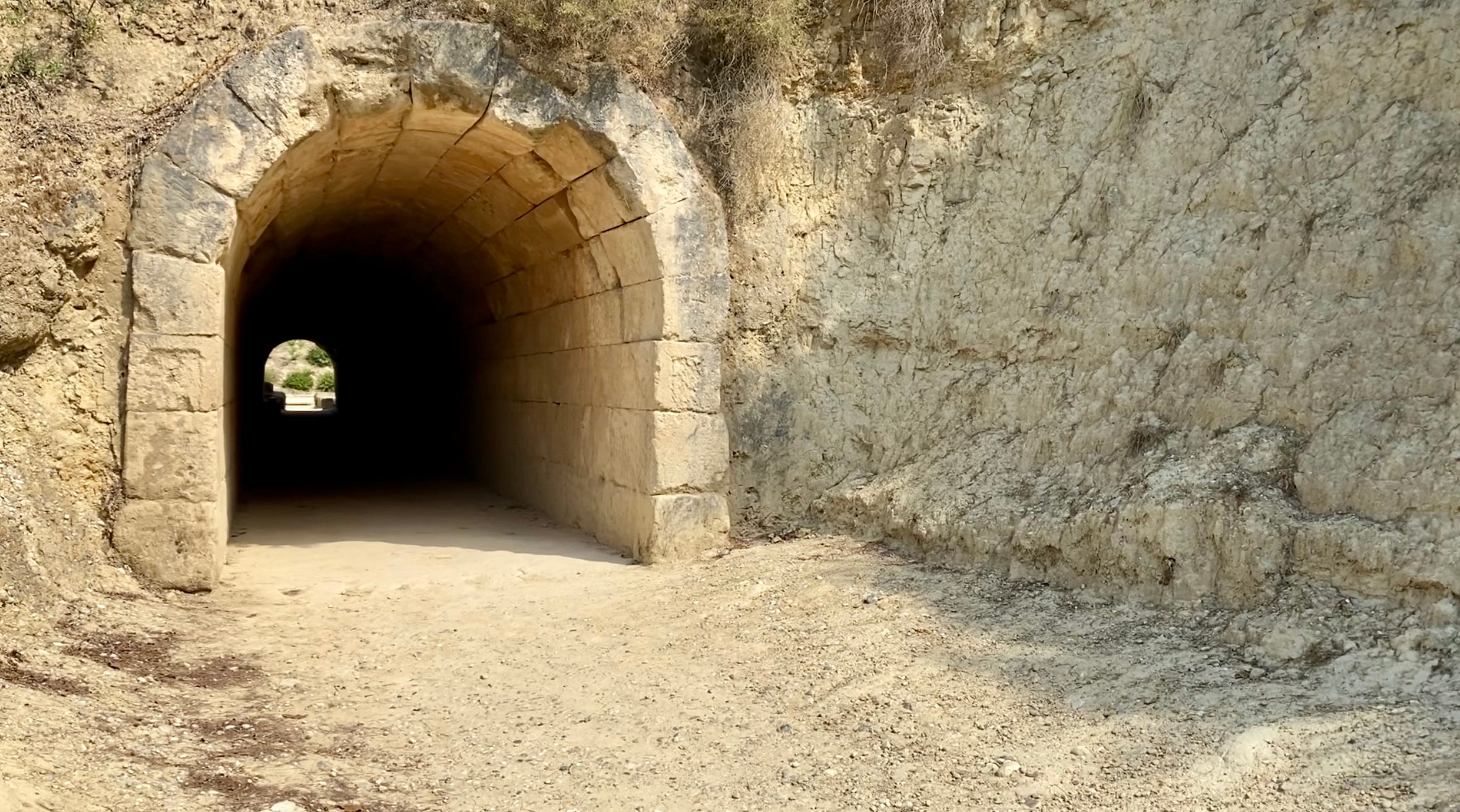
In a natural depression east of the Stadium lie the remains of a rectangular building with a central portico, the "Apodyteision" (locker-room) of the Stadium. This is where the athletes prepared for the upcoming competition. In order to enter the Stadium, the athletes had to pass through the "Krypte Eisodos" (hidden entrance), a 36 metres long barrel vaulted tunnel.
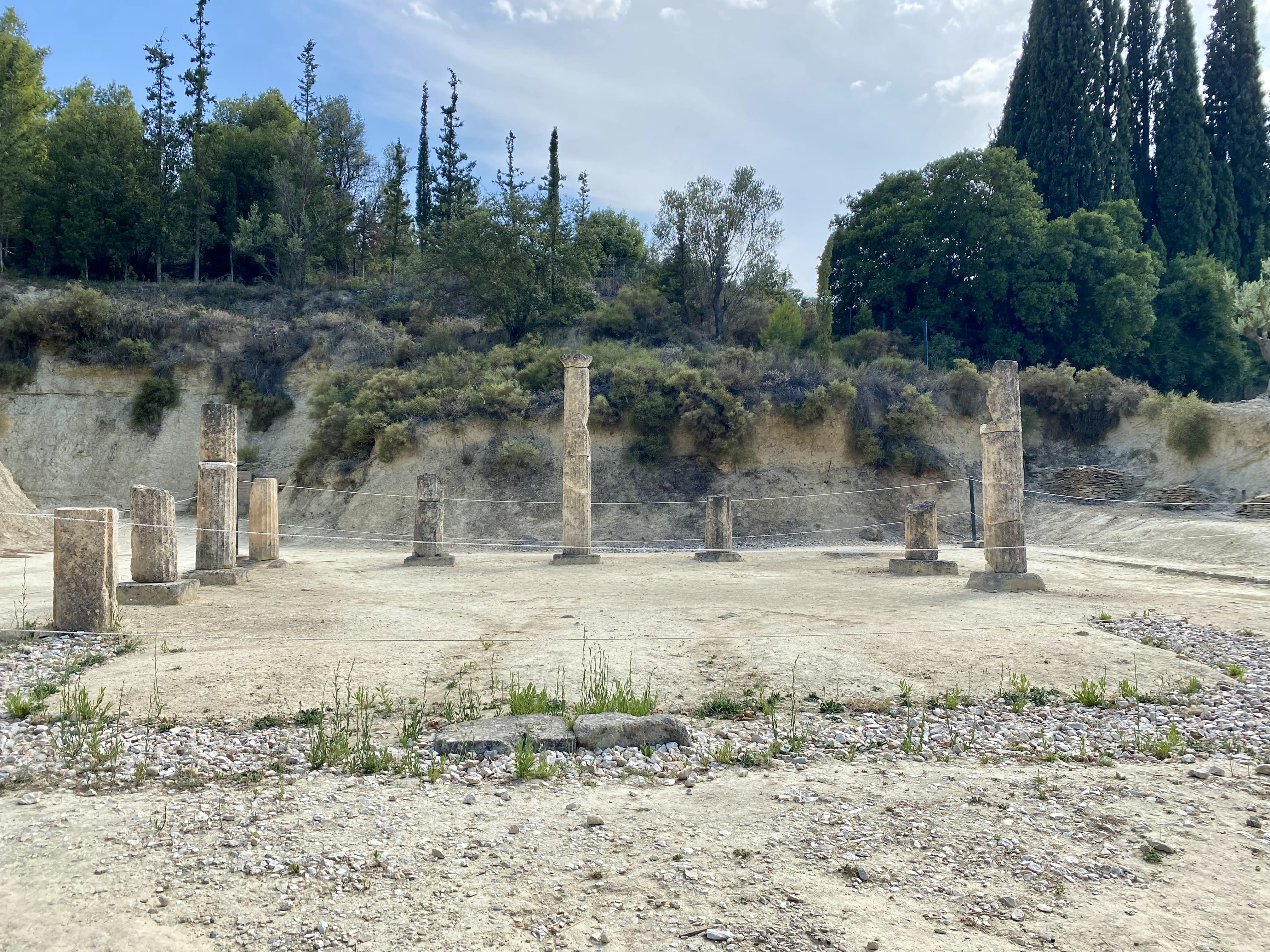
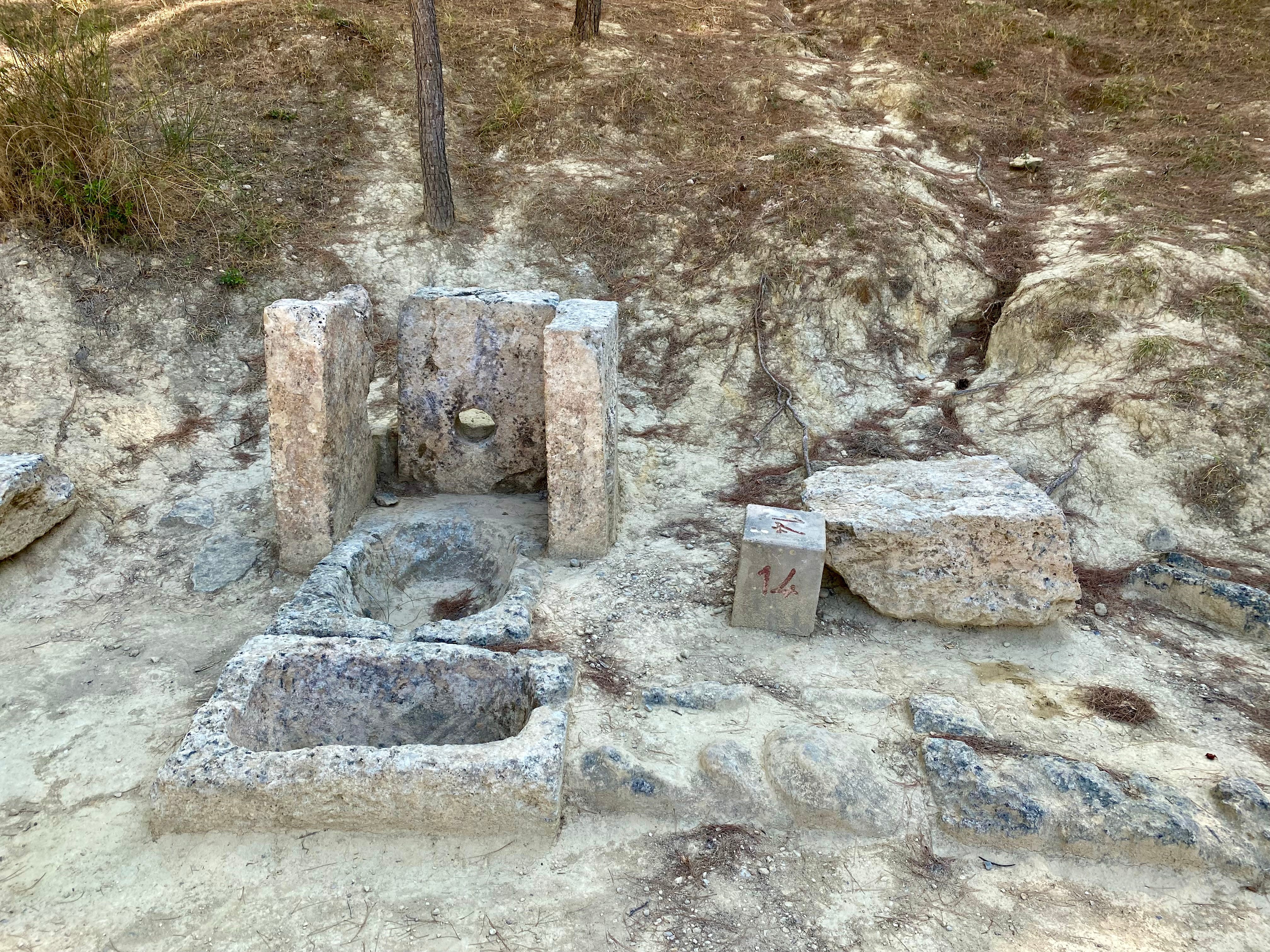
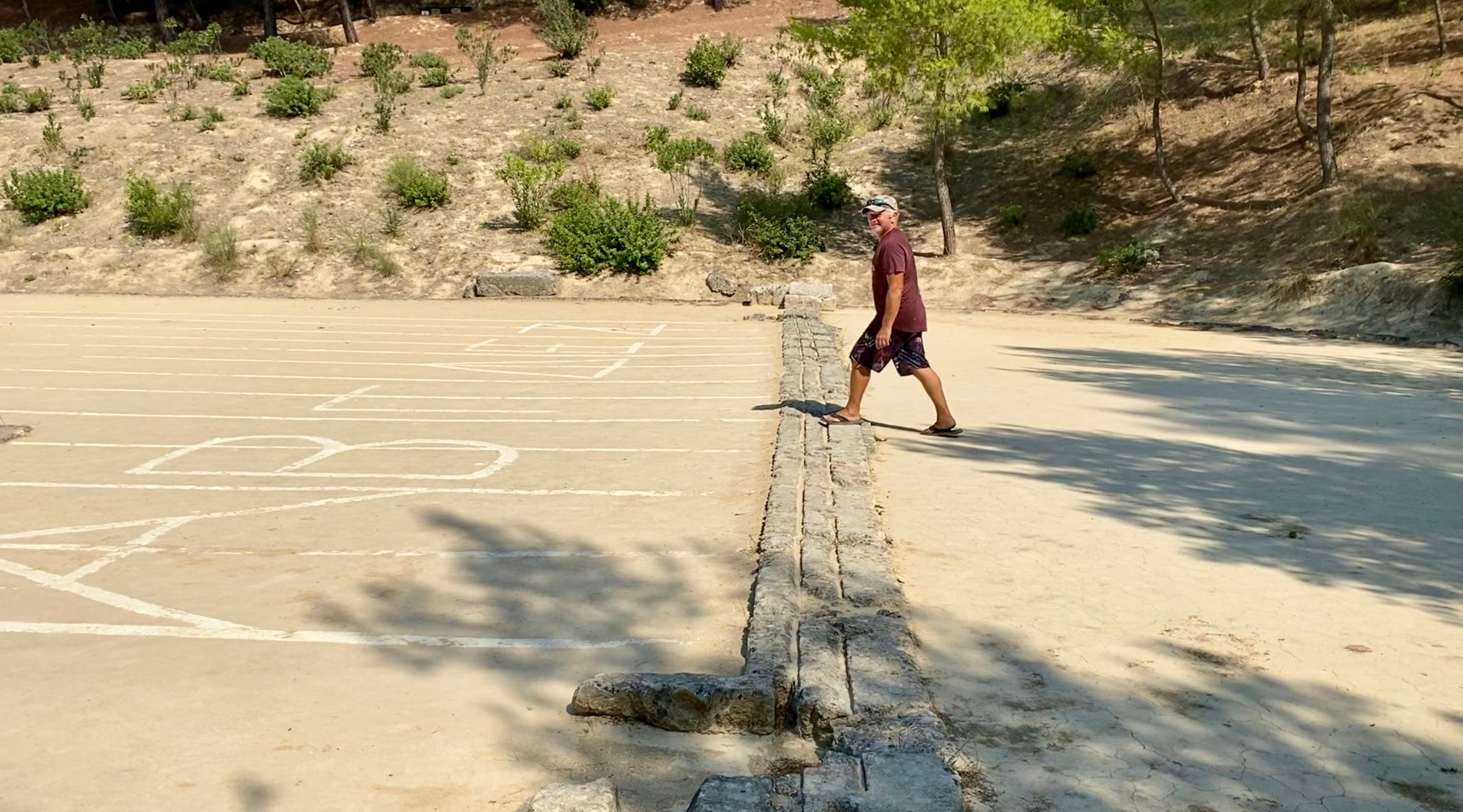
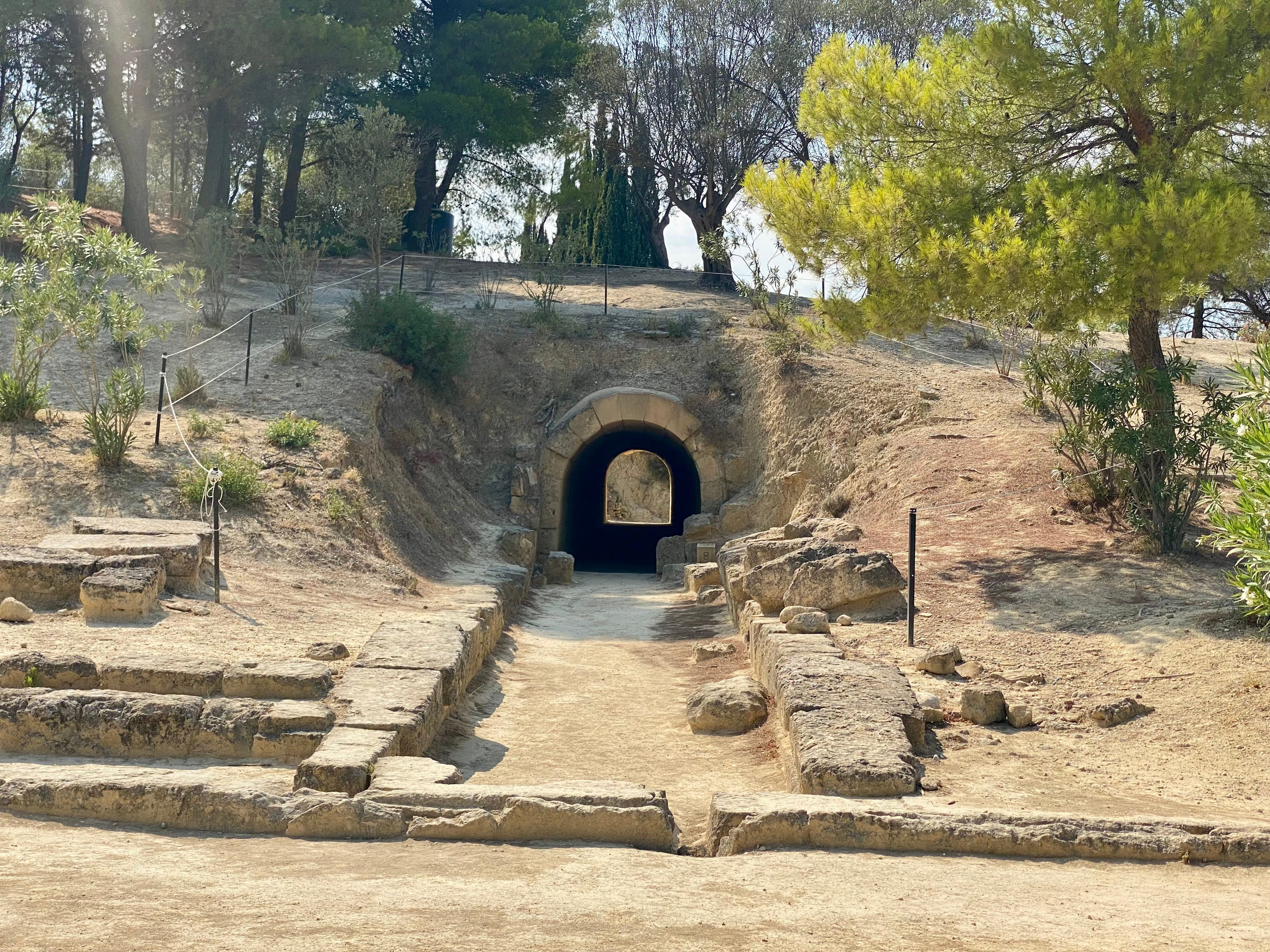
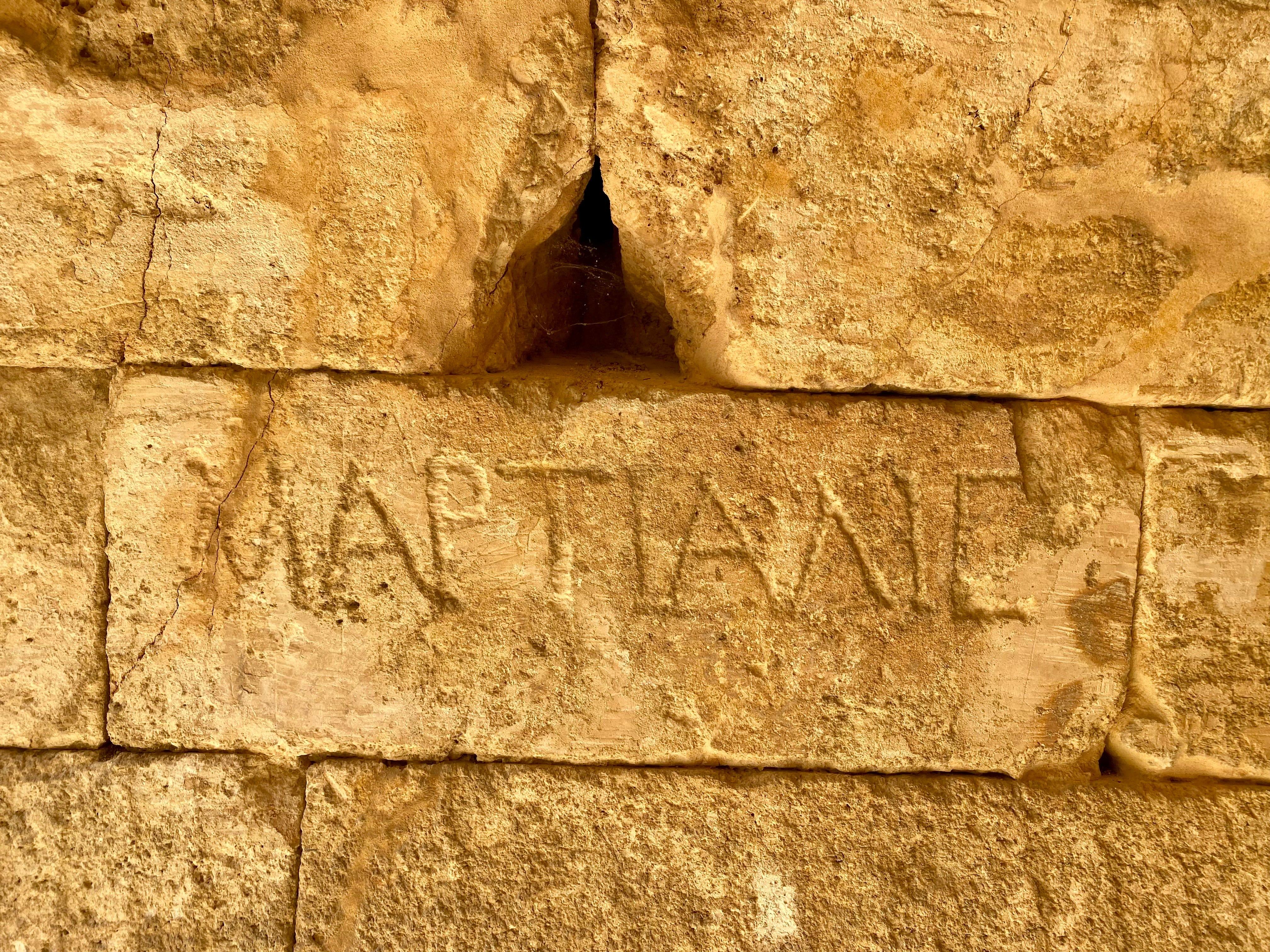
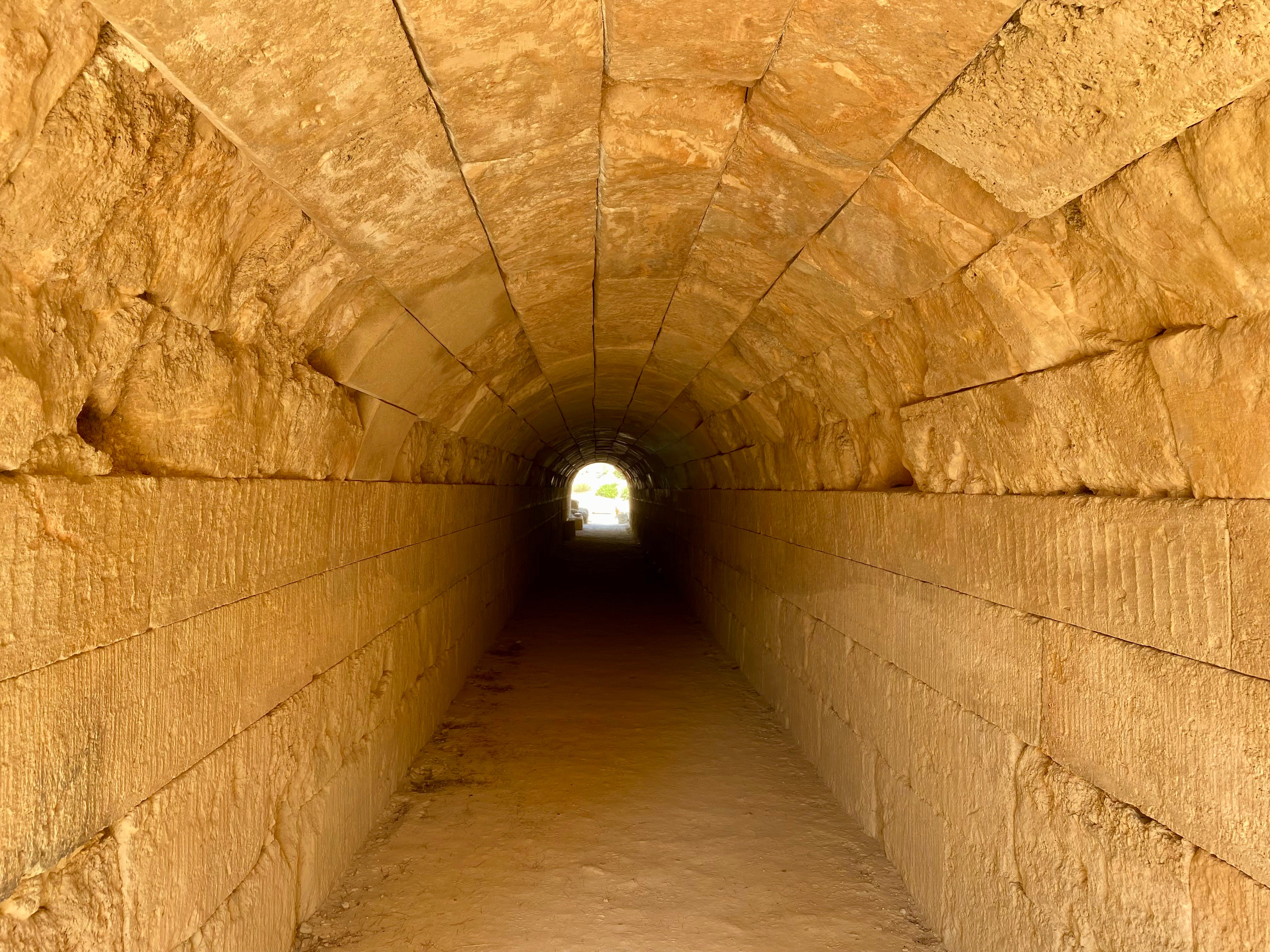
The Nemean Games were, like those at Olympia, Delphi, and Isthmia, "crown" games at which the prize of victory was a simple wreath of wild celery.
Museum
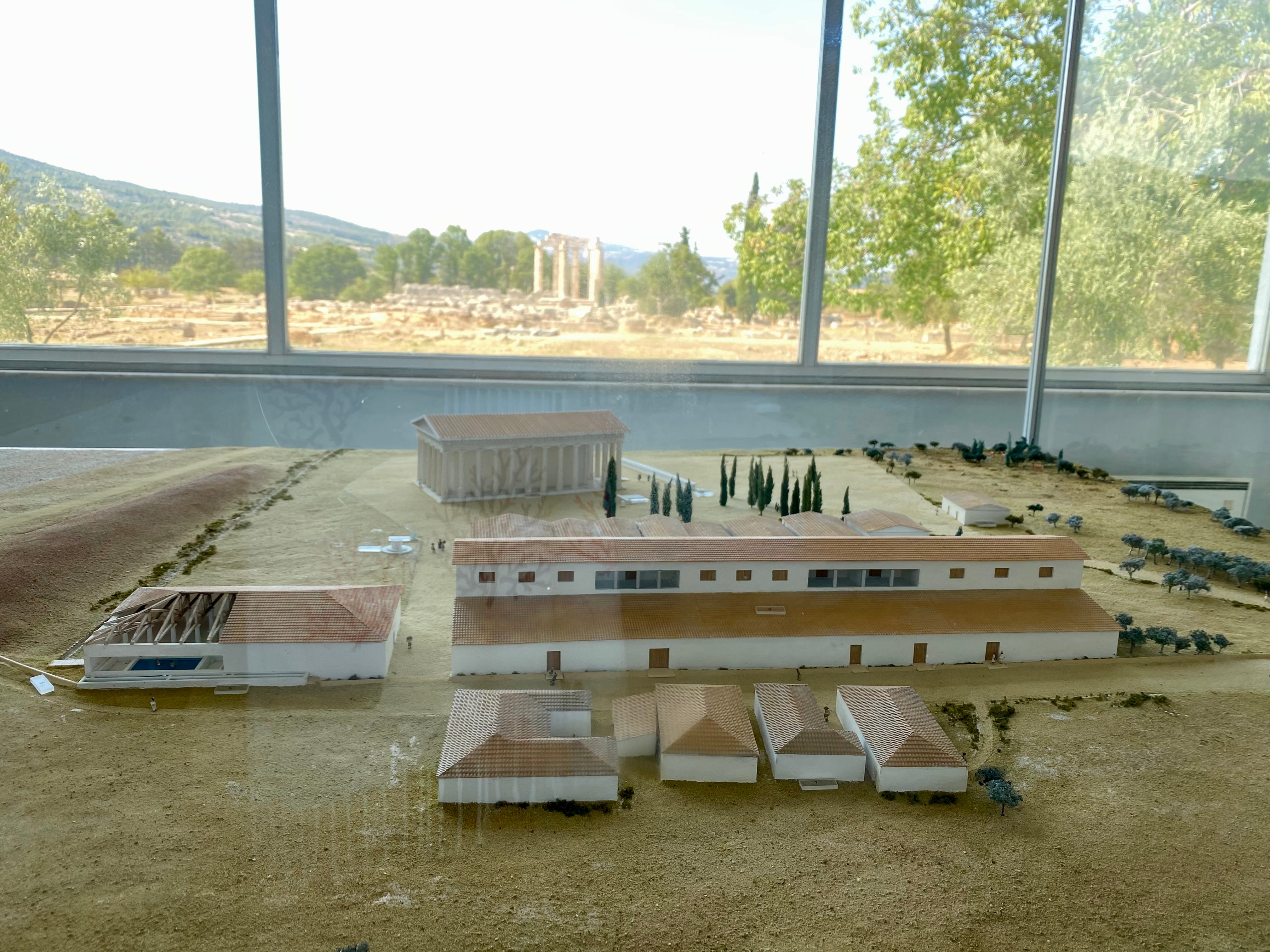
We jumped back in our car and headed to the main site, which has its own museum onsite, which we visited first to hopefully learn about the site before we went to look at it. We often do this so we might have a better idea of what we are looking at and keep an eye out for key features.
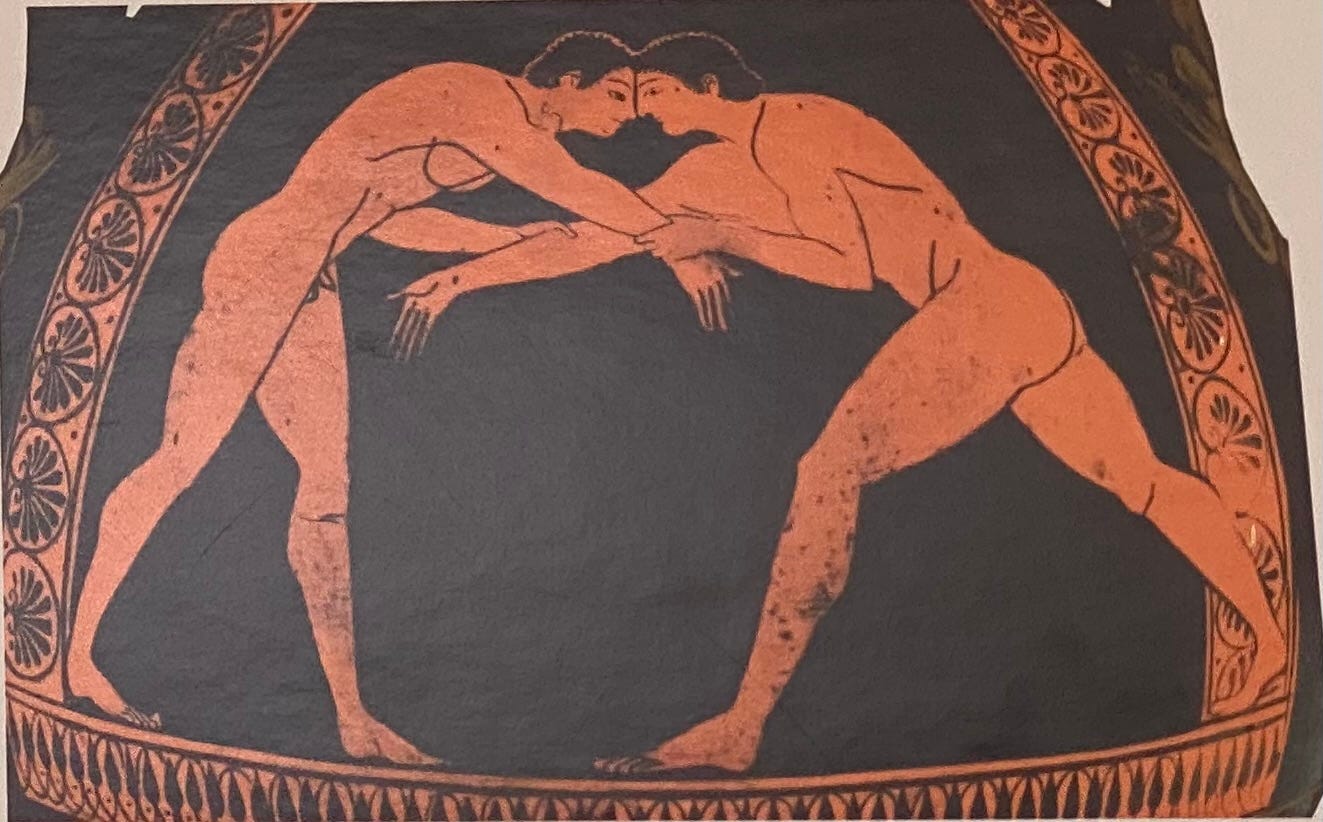
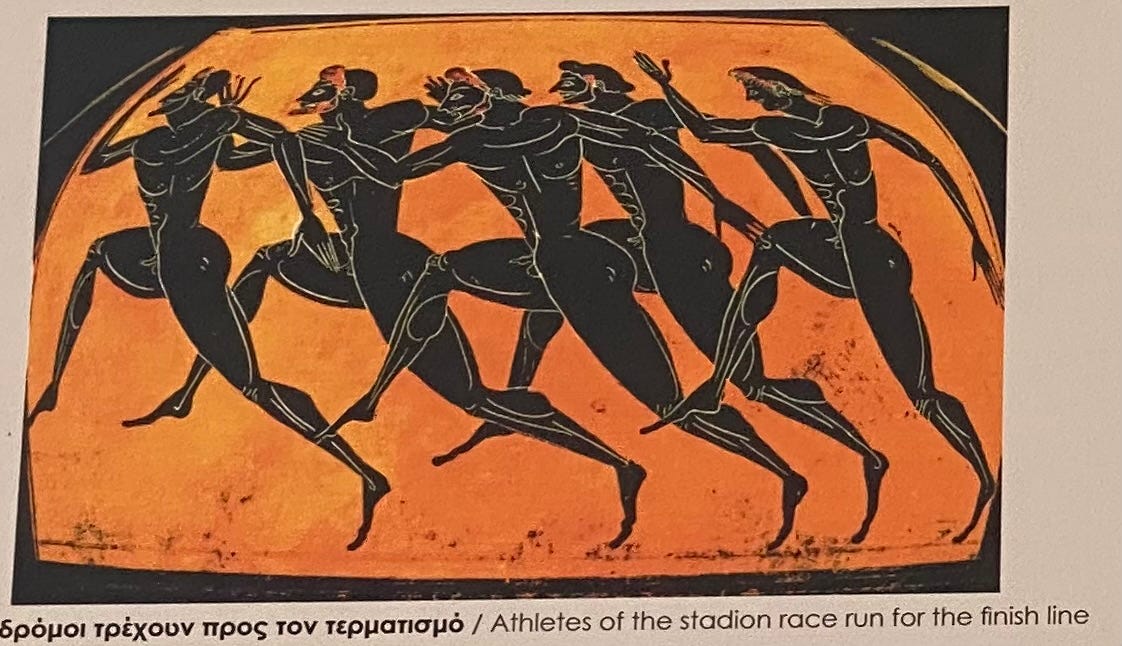
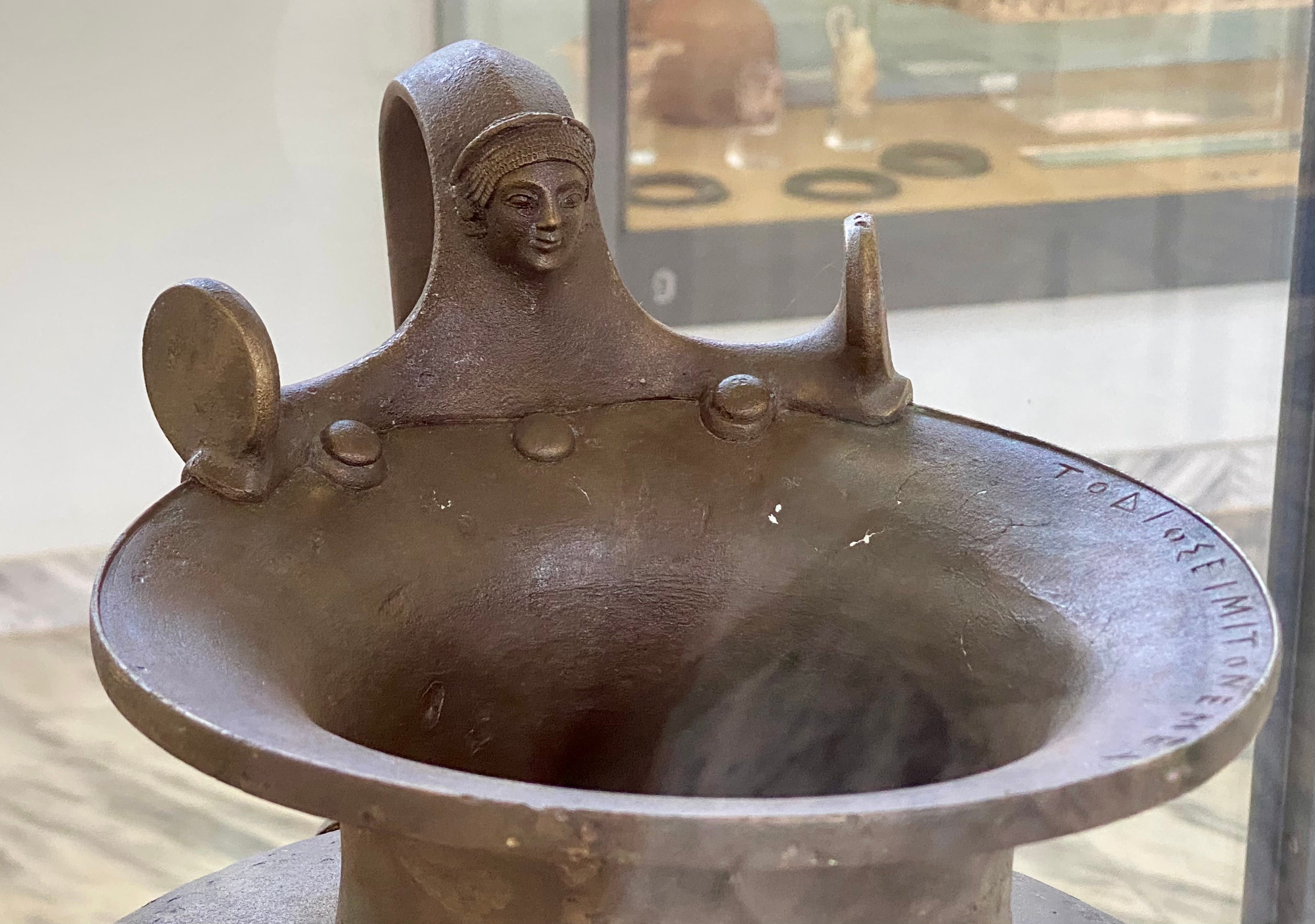
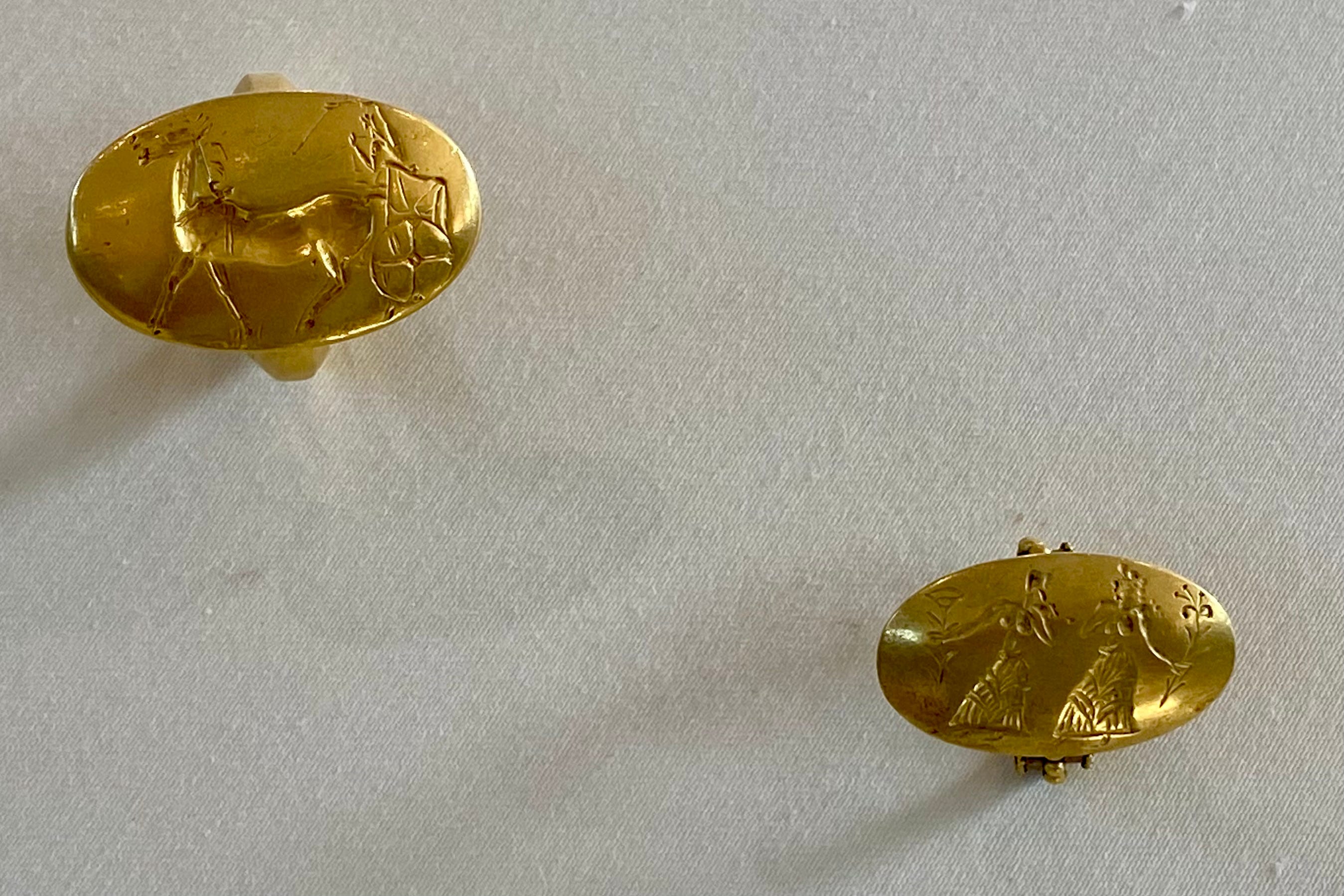
The Greeks like to depict their competitions in their art - mostly on the pottery used everyday - as well as statues and frescos.
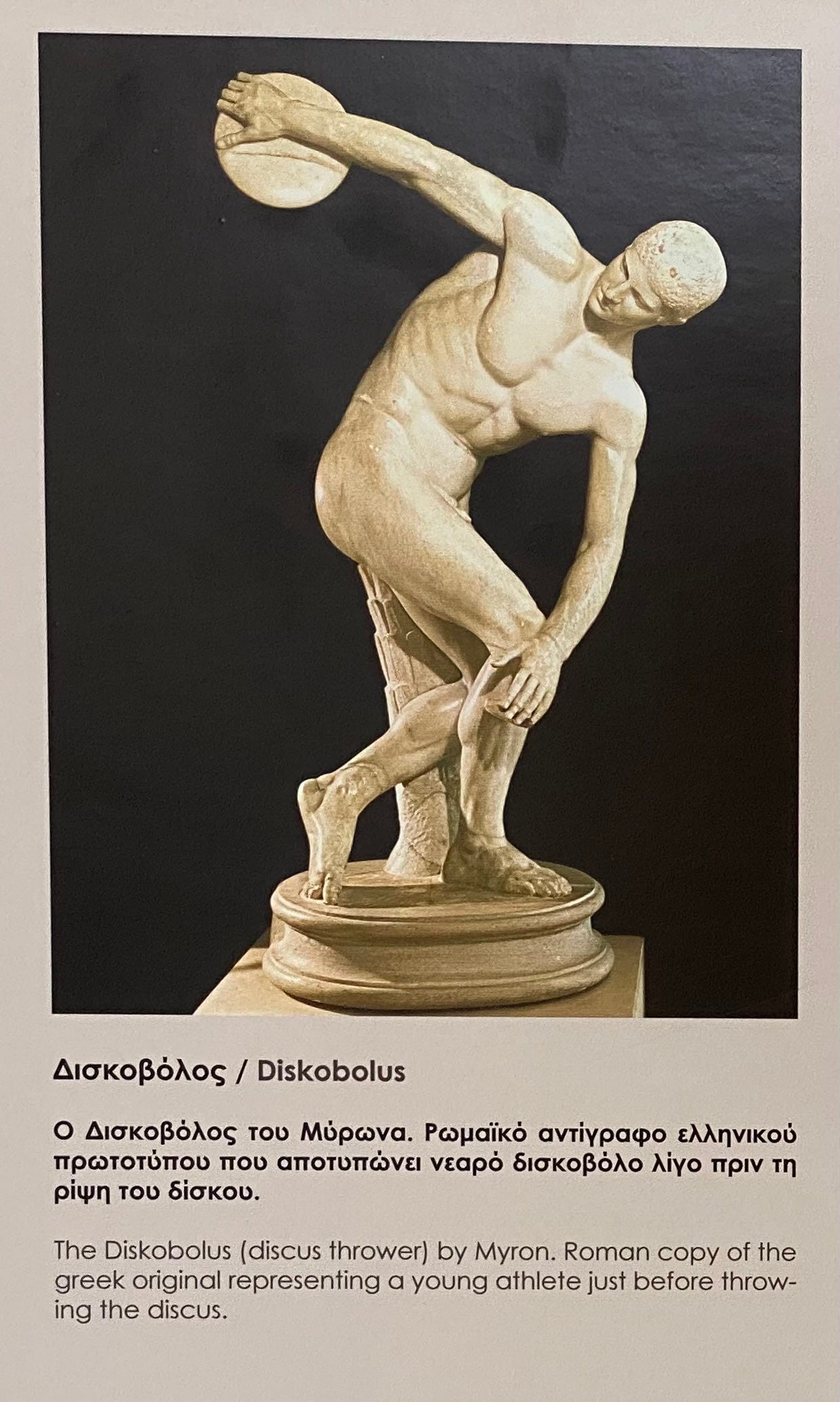
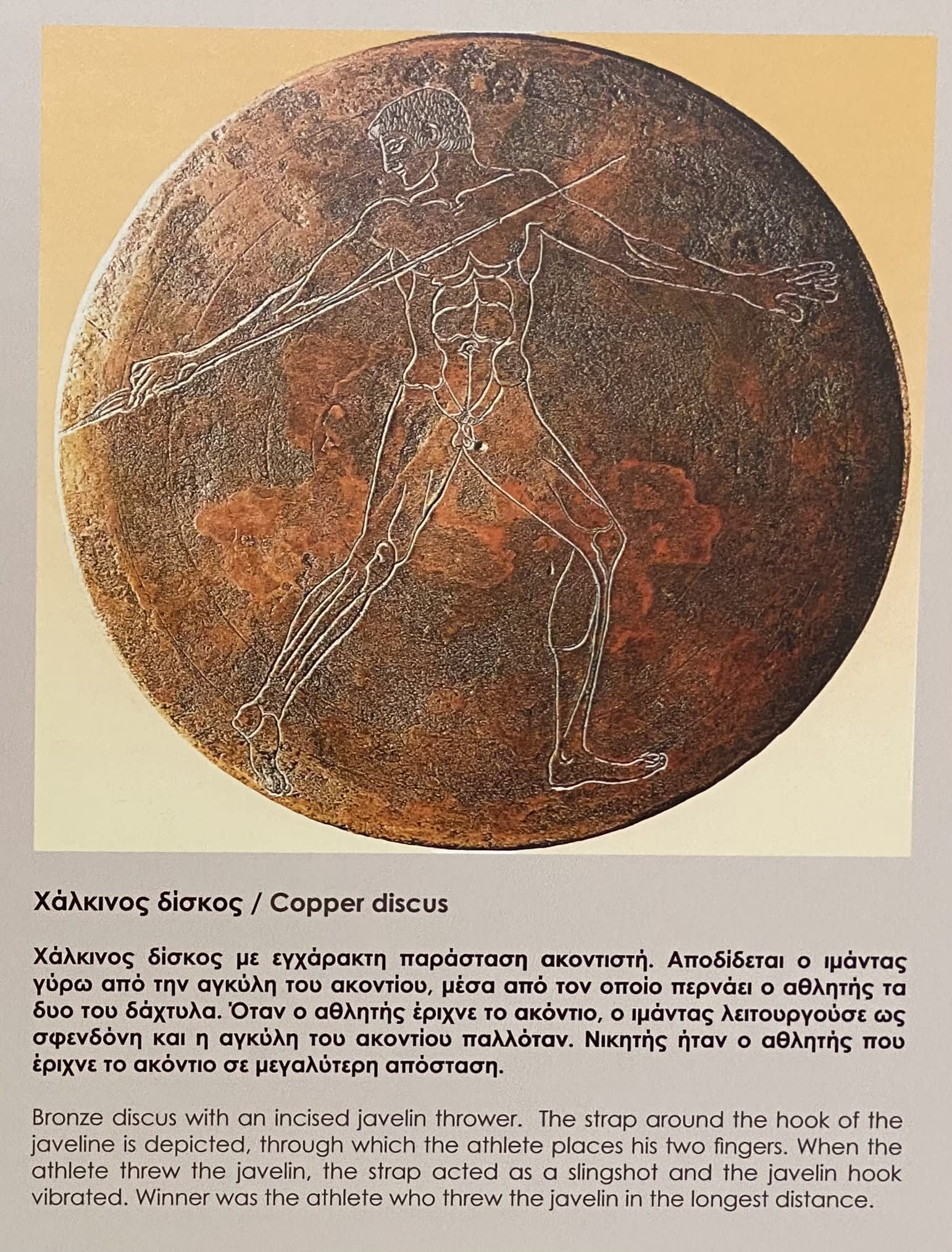
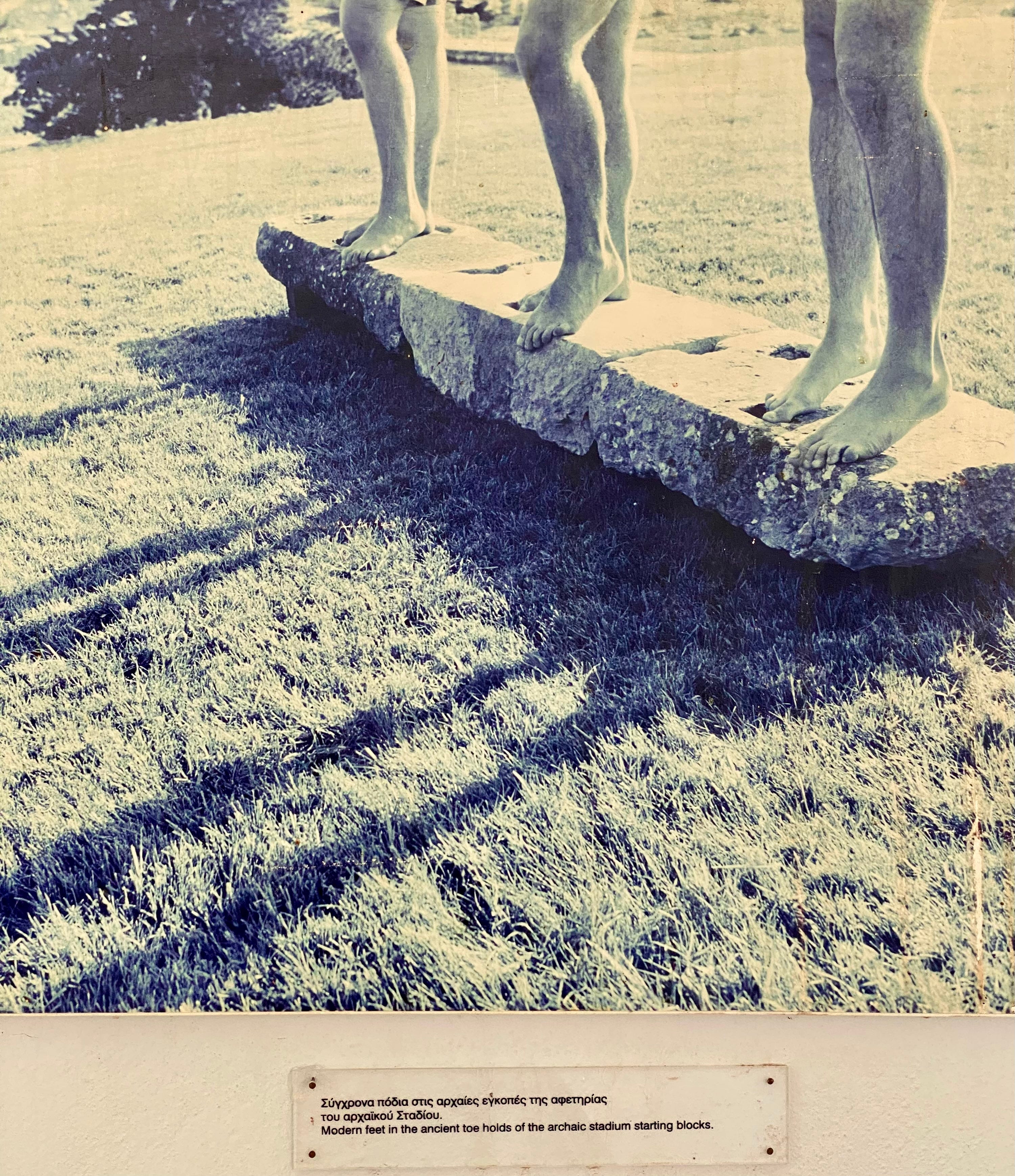
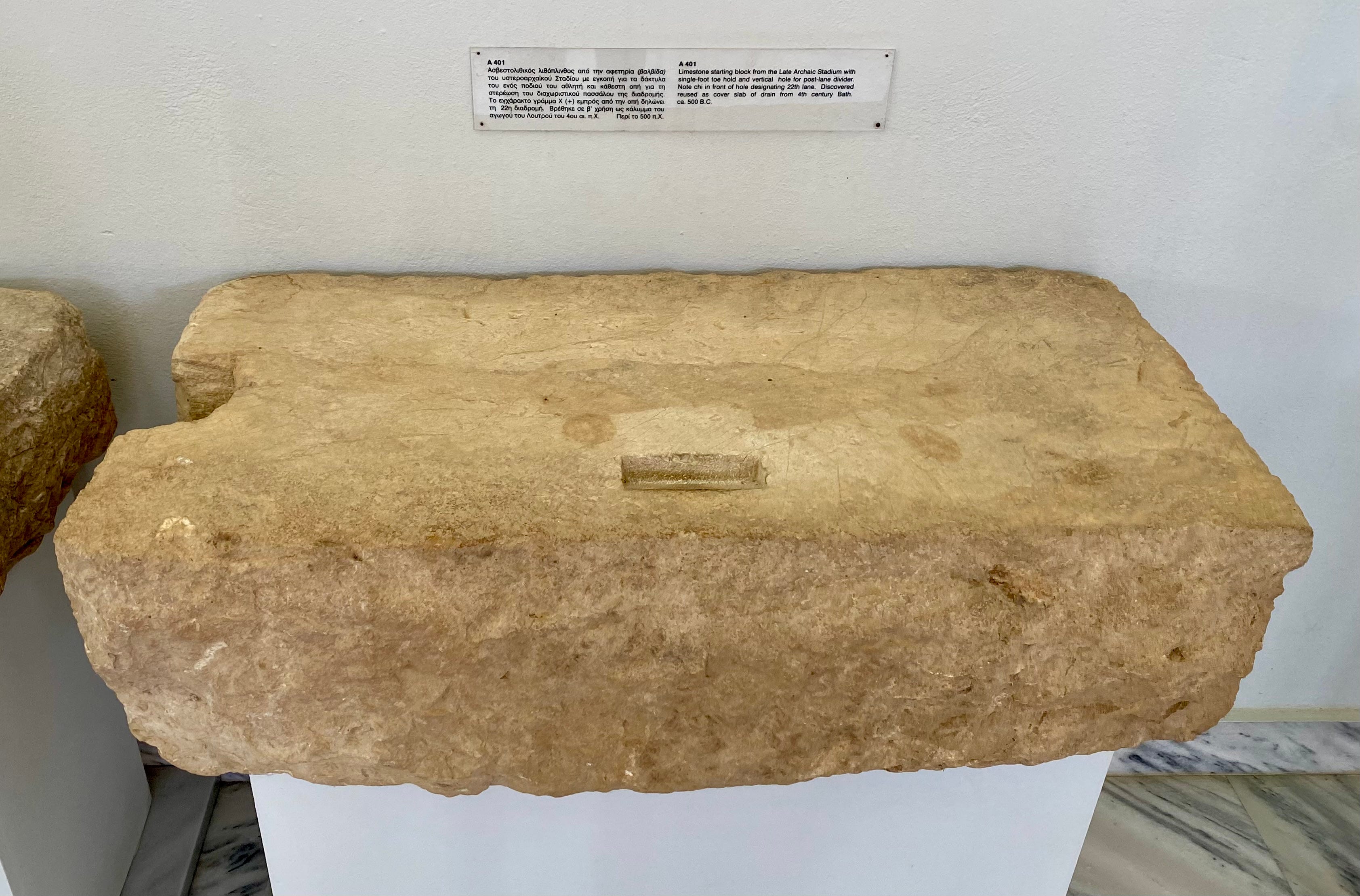
Archeological Site of Ancient Nemea
After a quick look around the museum, we headed back outside for a look around the site. The main attraction for us here was the temple of Zeus. It’s had some reconstruction work done on it, and I’m sure there will be more to come if funding is available.
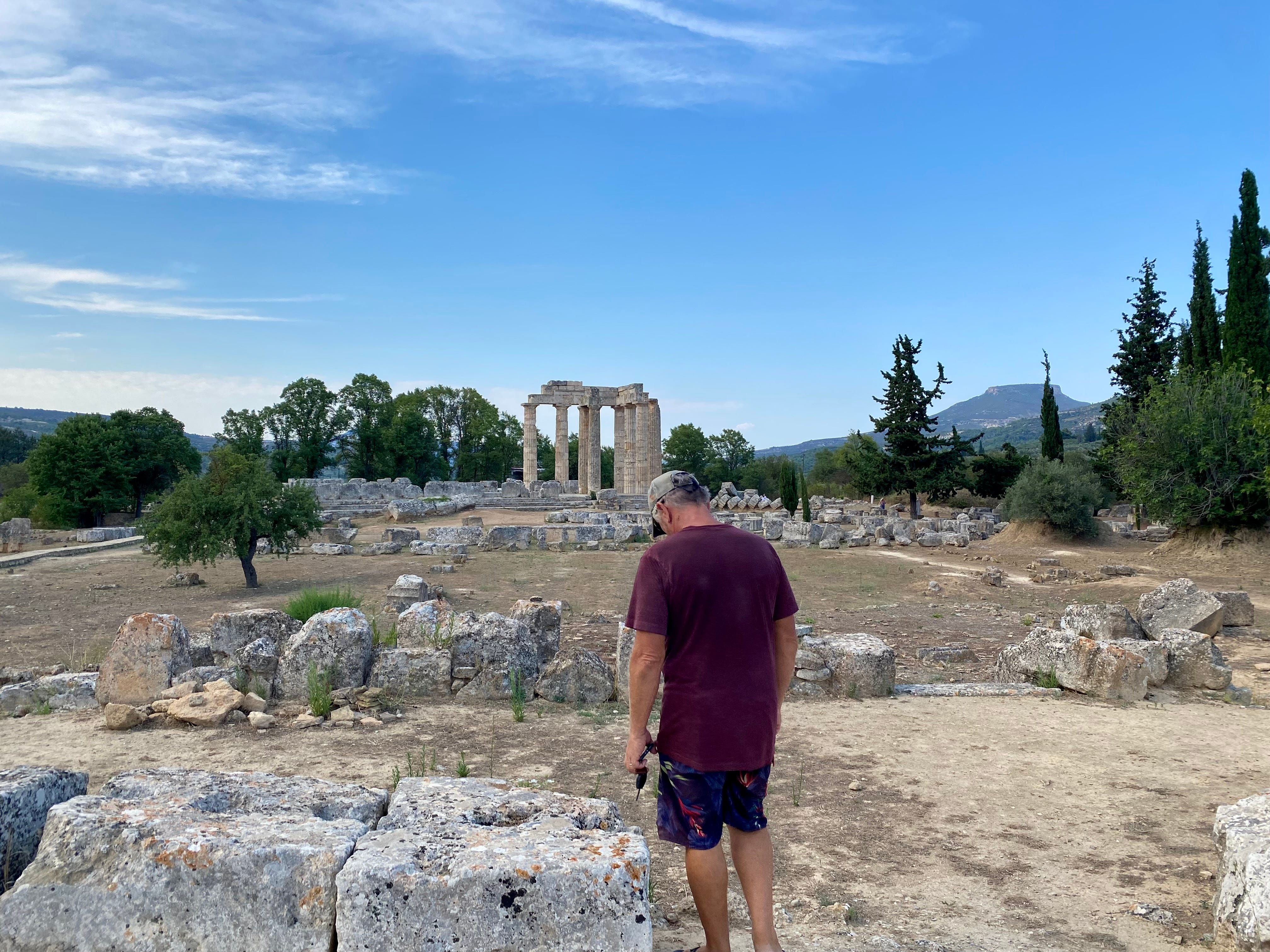
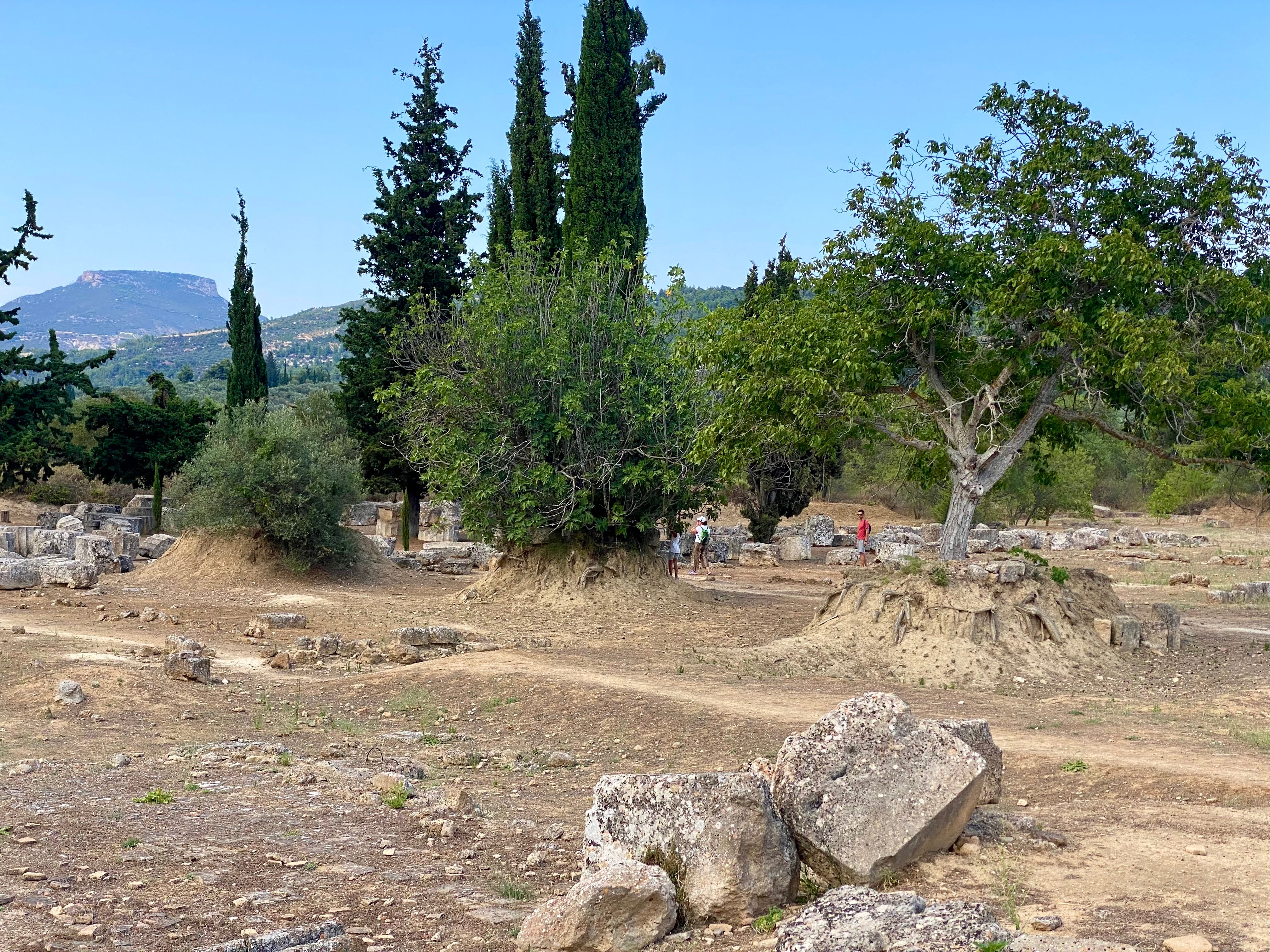
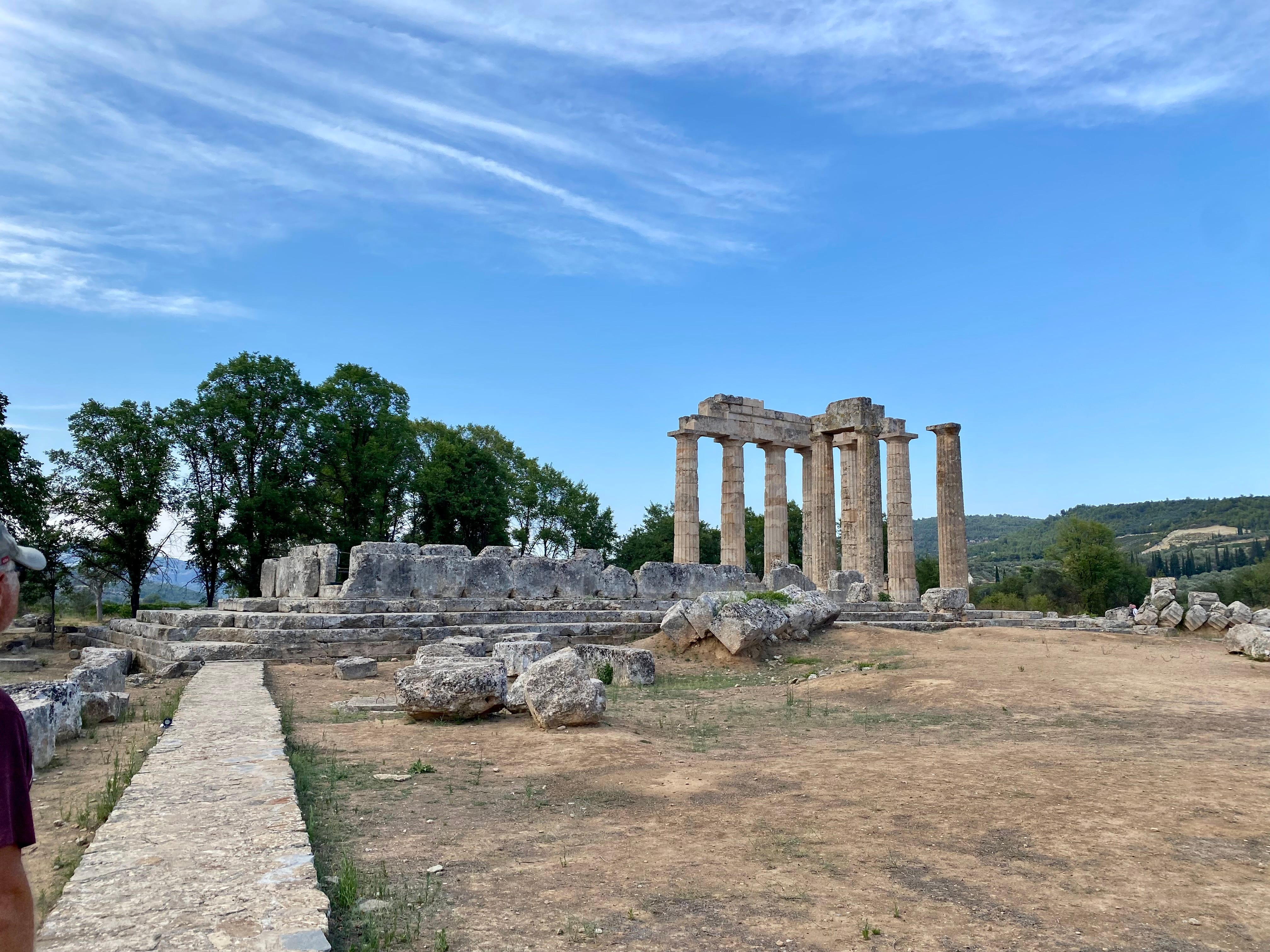
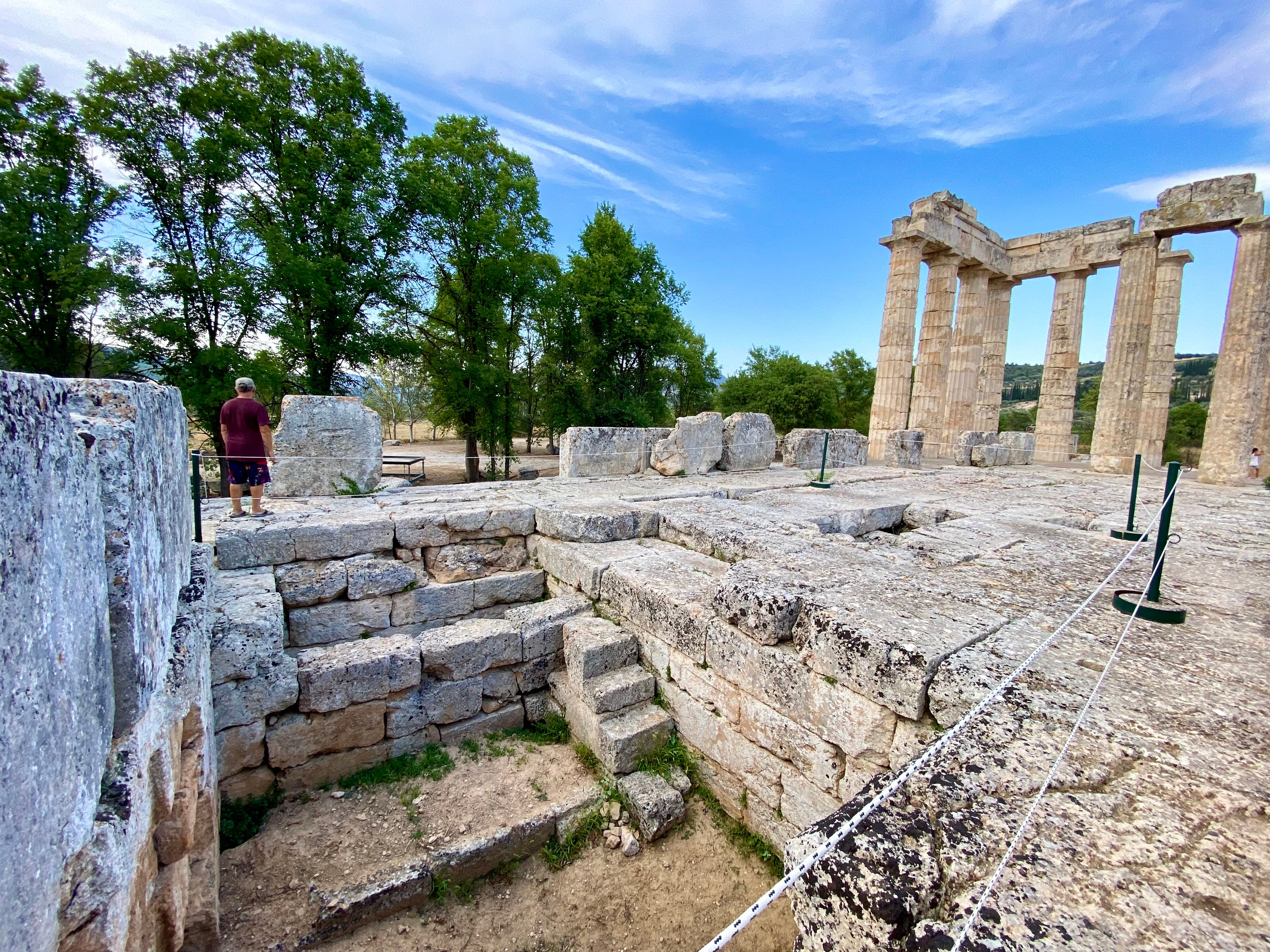
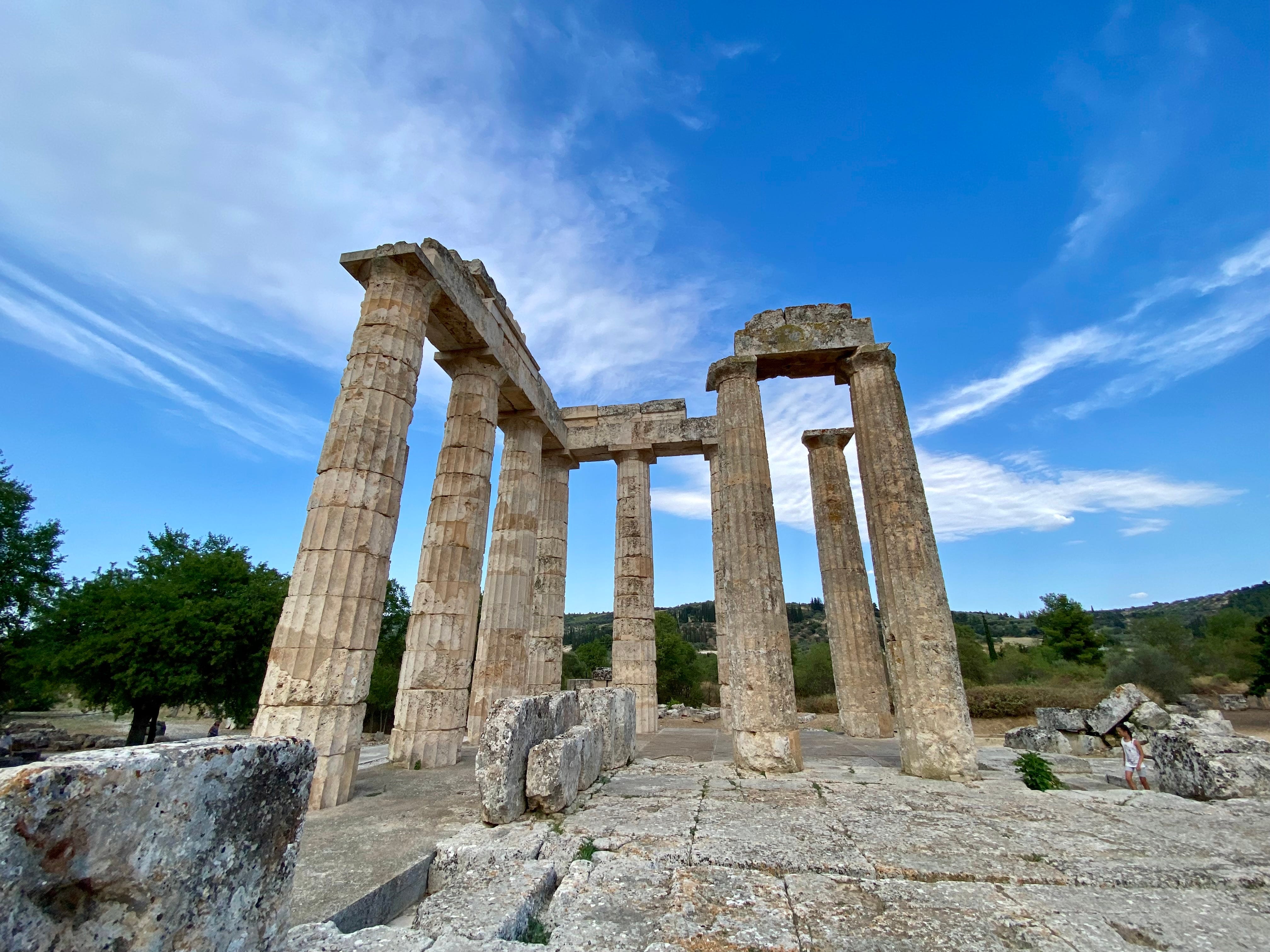
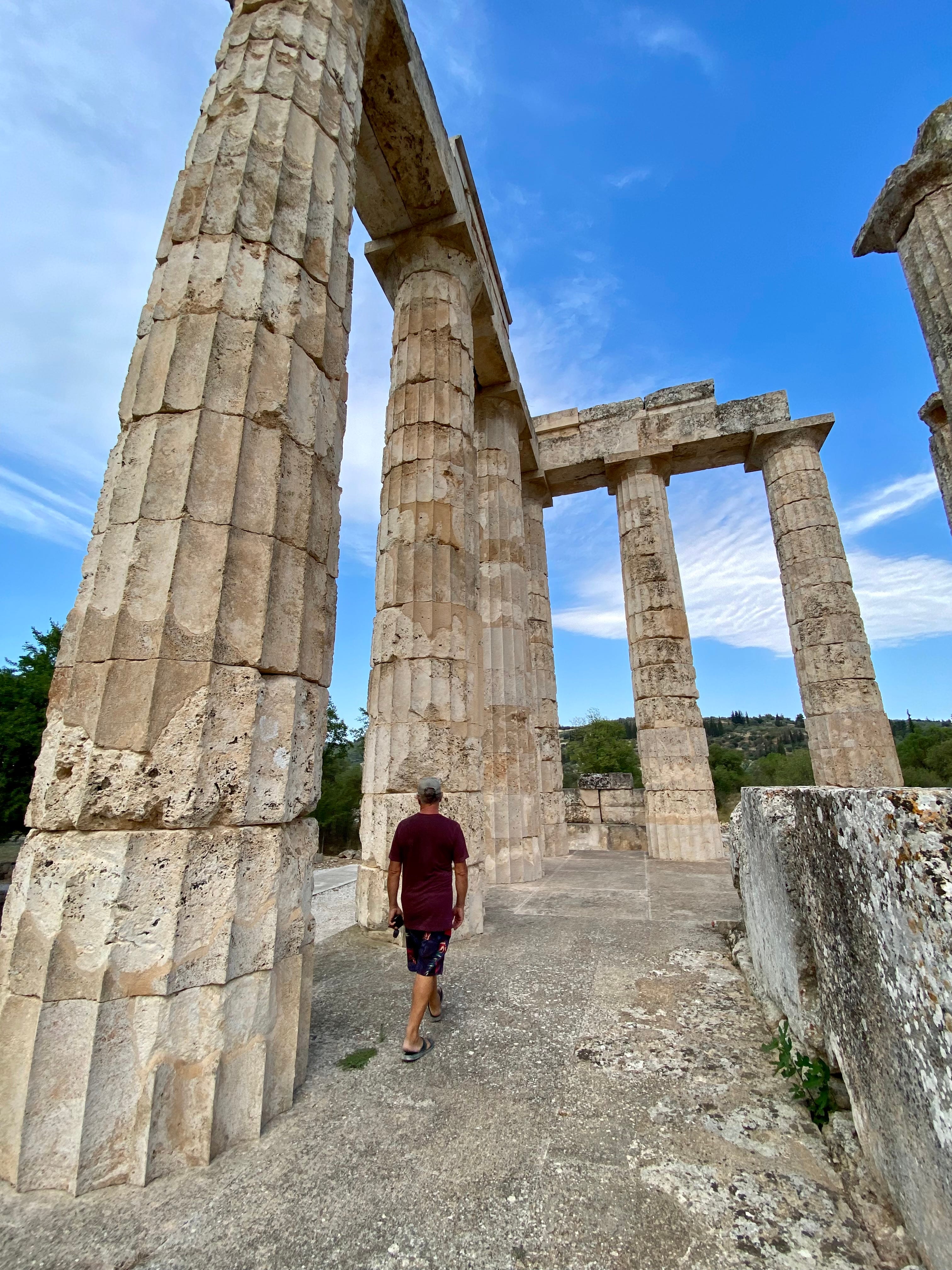
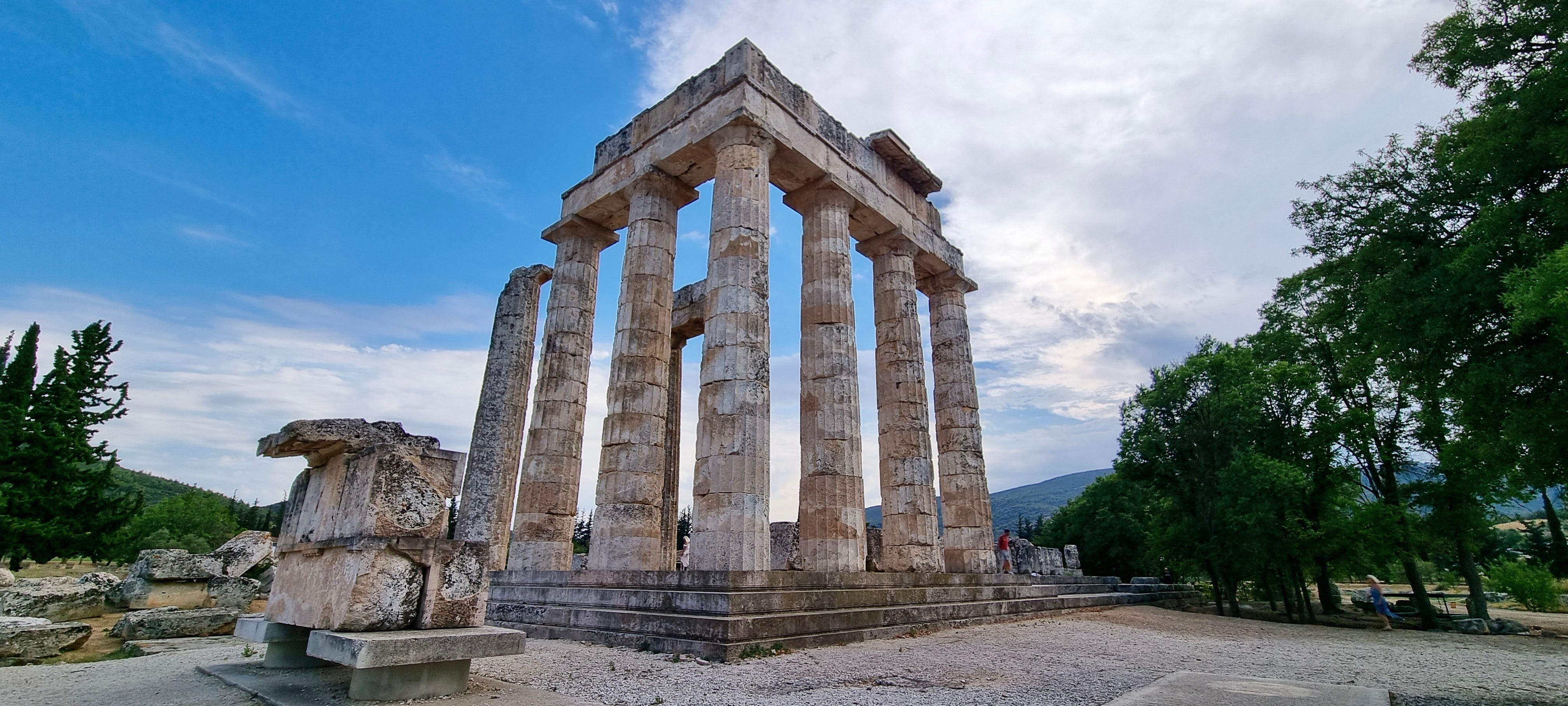
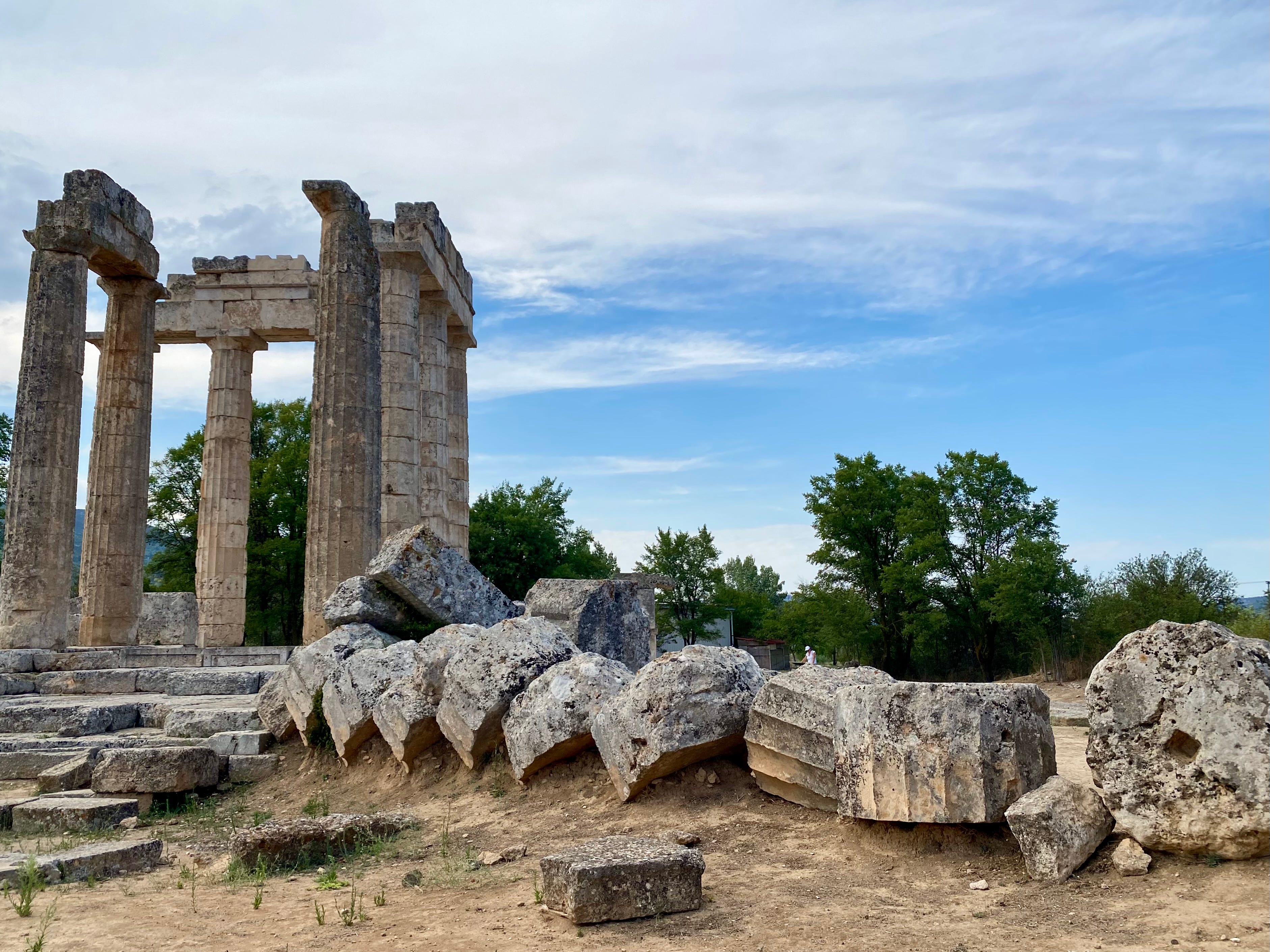
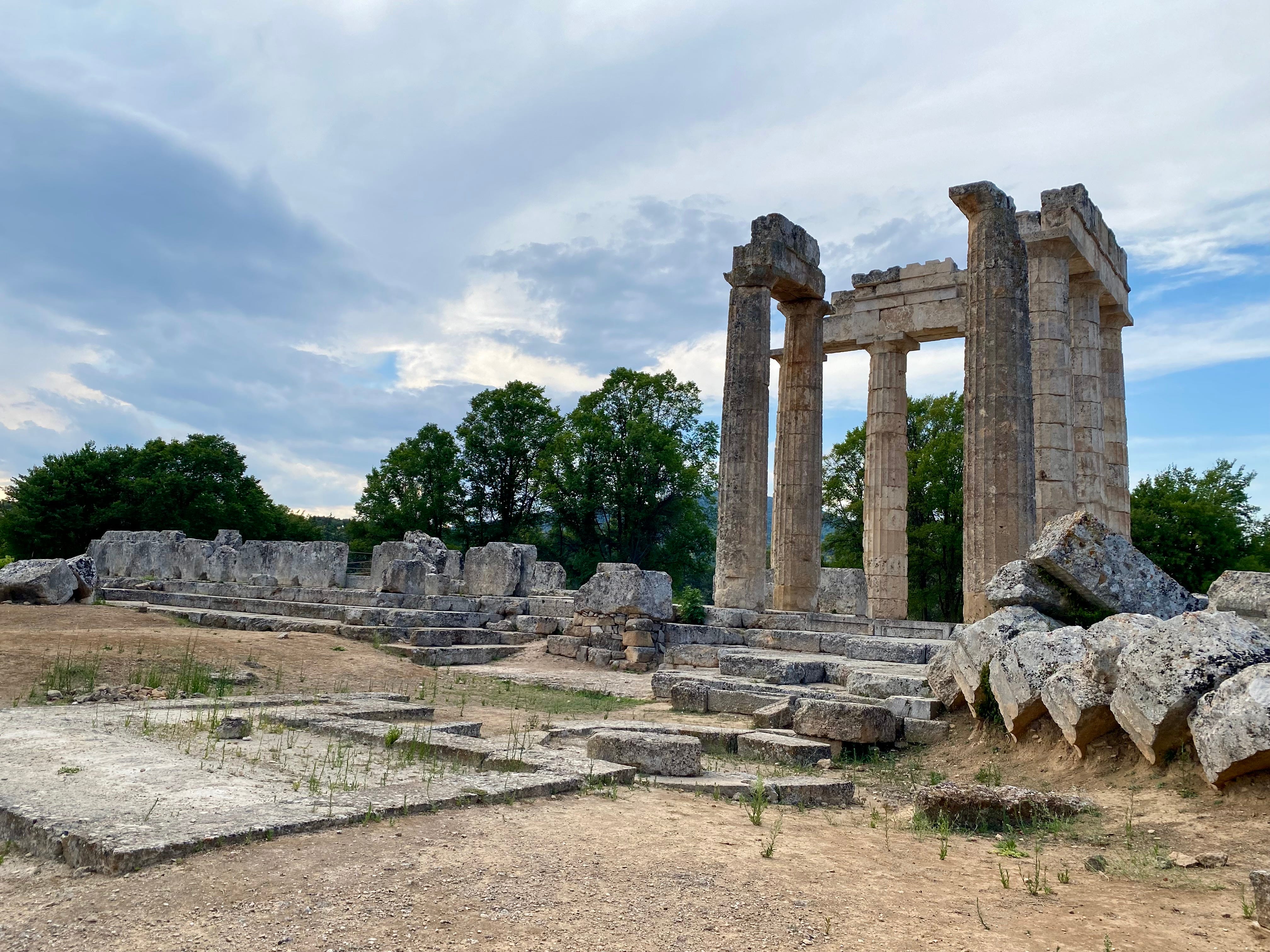
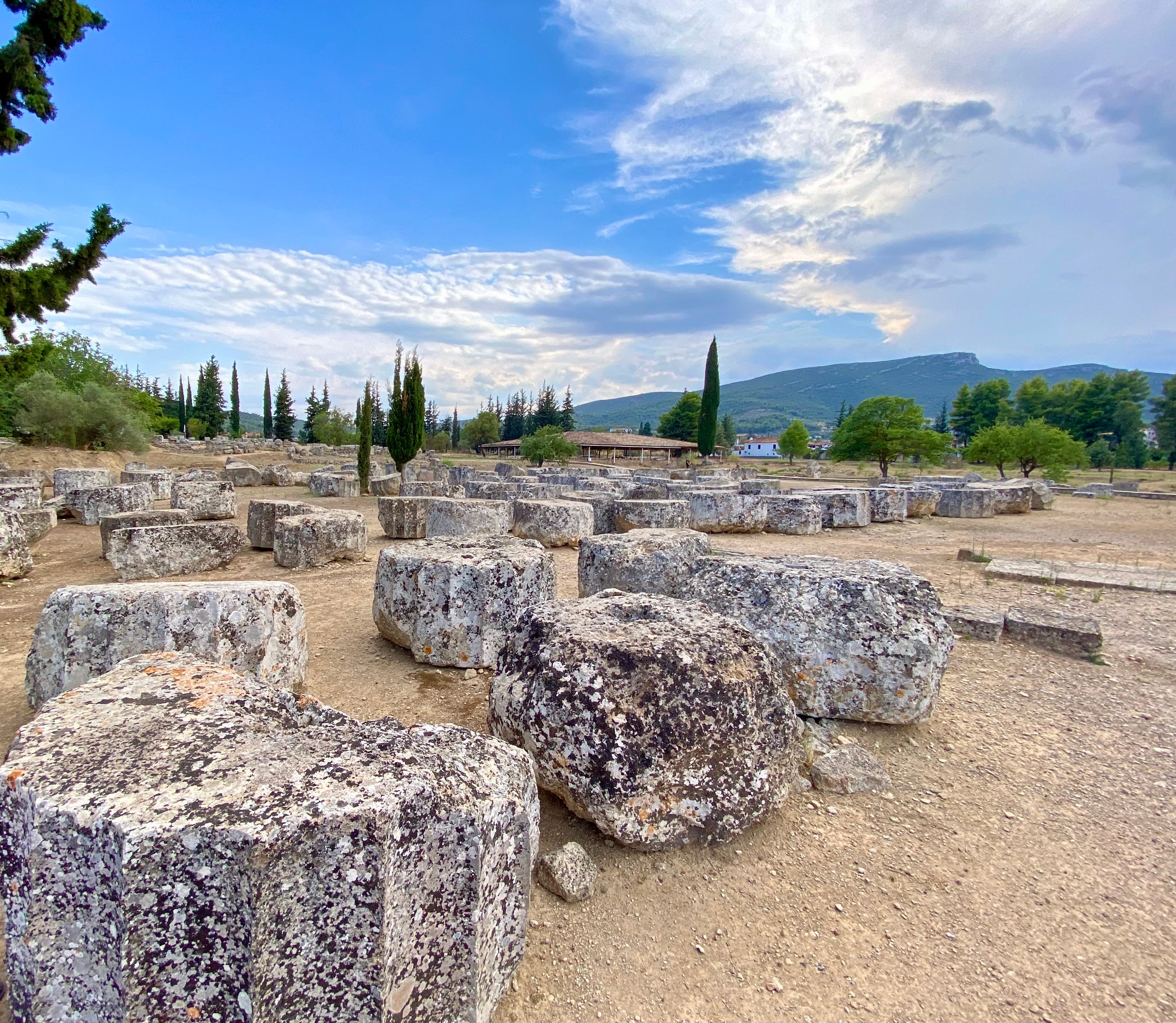
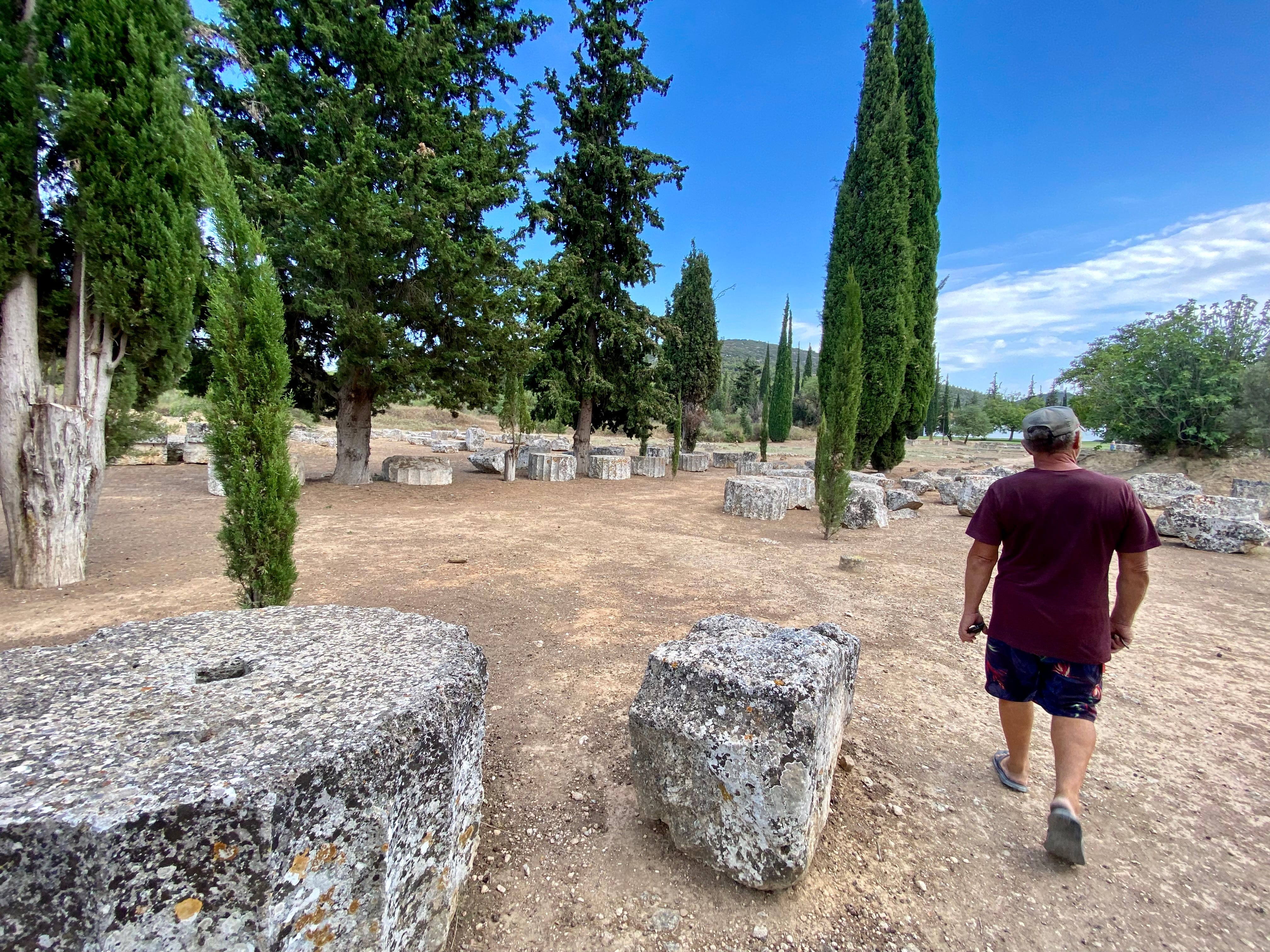
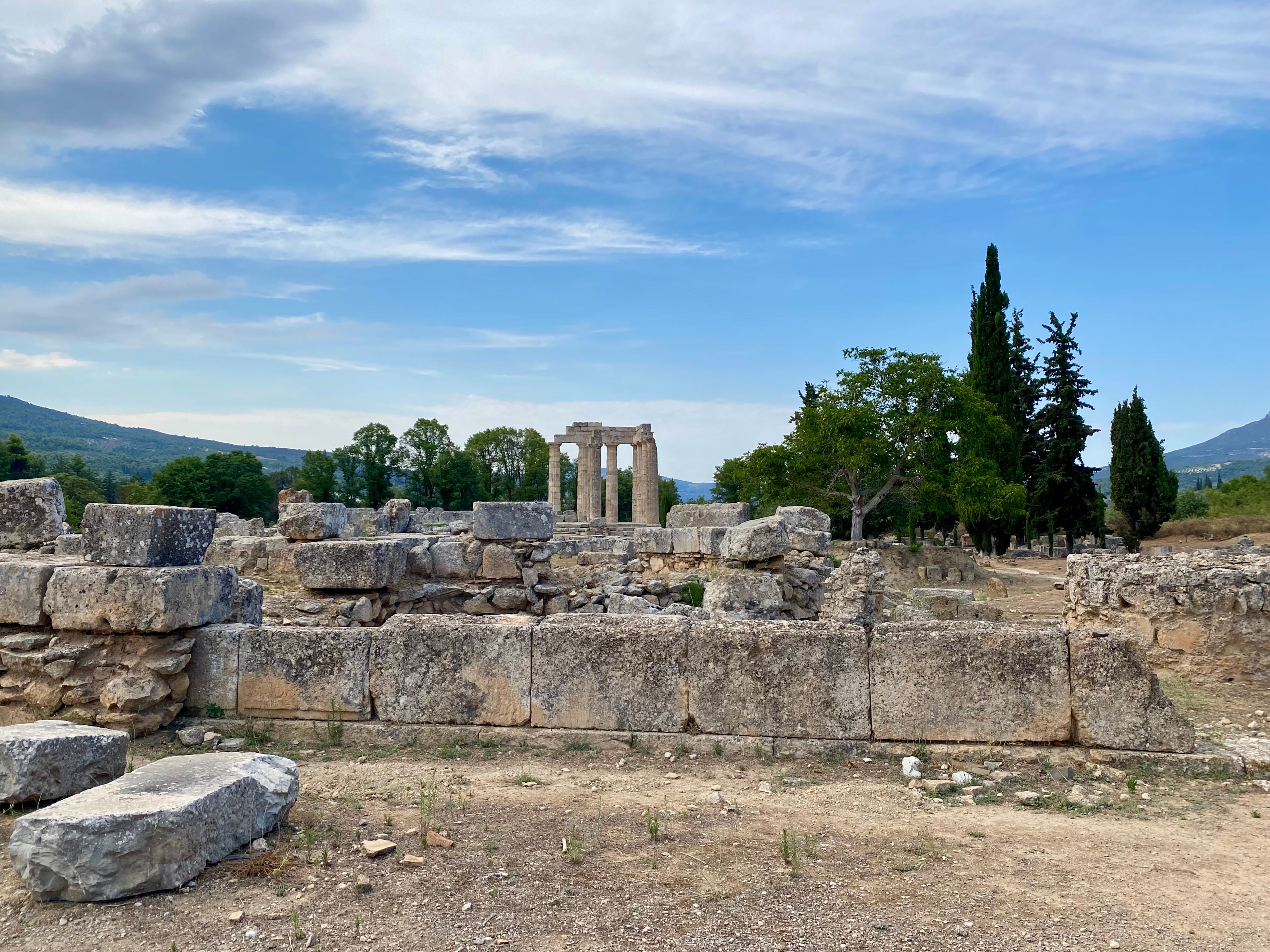
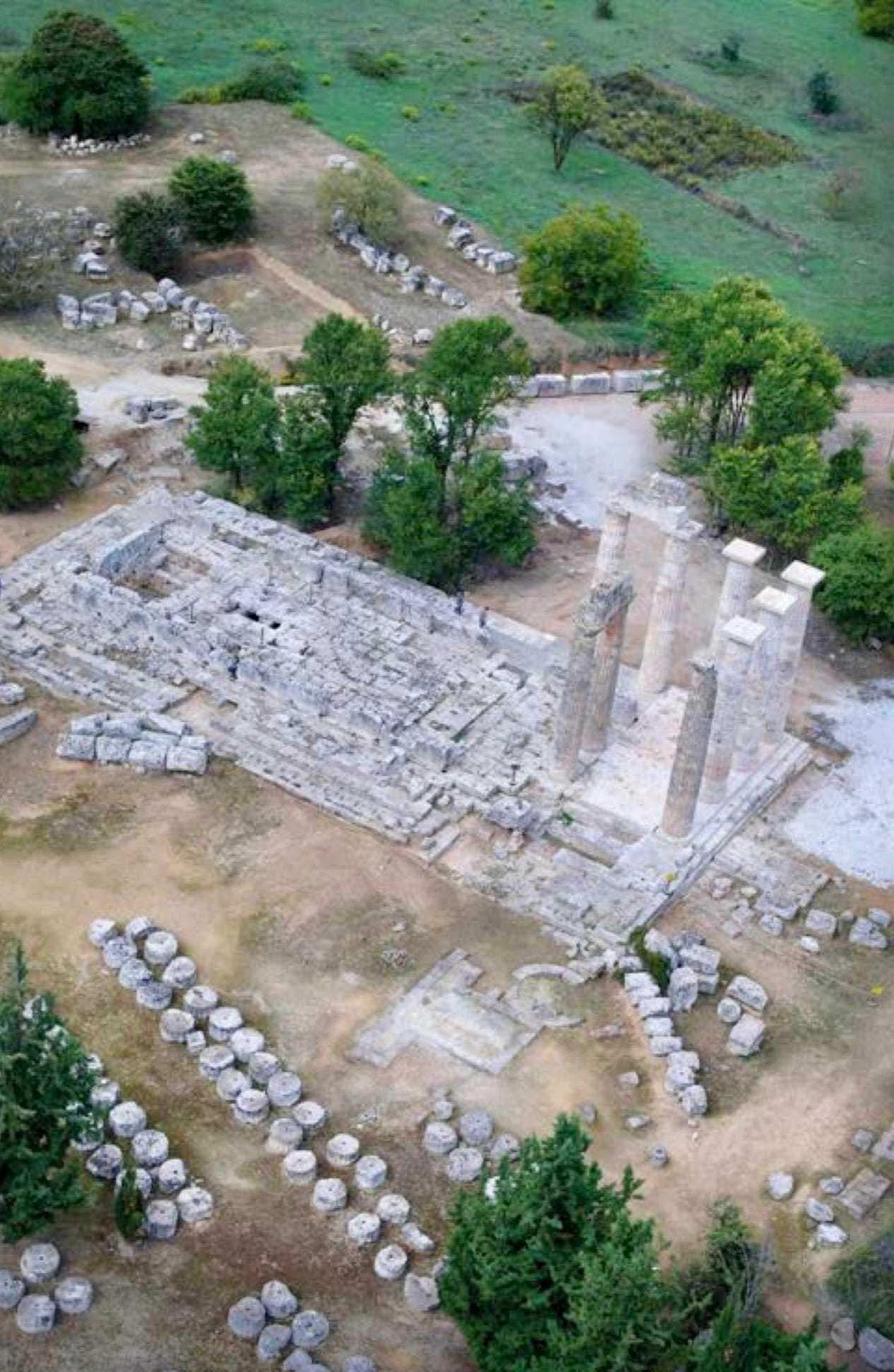
After the games were shifted back to Argos in 271AD, the Nemean sanctuary was gradually abandoned.
In the early-Christian era (late 4th-5th century AD) a large agricultural settlement was created on the site. In AD 453 the emperor Theodosius banned all pagan activities and so began the systematic destruction of the Temple of Zeus: its architectural members were used for the construction of a Basilica with a central nave and one aisle at each side.
The settlement was abandoned around AD 580.
Next stop: Ancient Corinth